REVIEW · VANCOUVER
Caribou – Discover the Best of the Rockies (8-Days)
Book on Viator →Operated by Moose Travel Network · Bookable on Viator
Eight days in the Rockies change your whole mood. You’re led by a professional driver-guide and built-in stops add real context, including time at the Squamish Lil’Wat Cultural Centre and Indigenous-led meals.
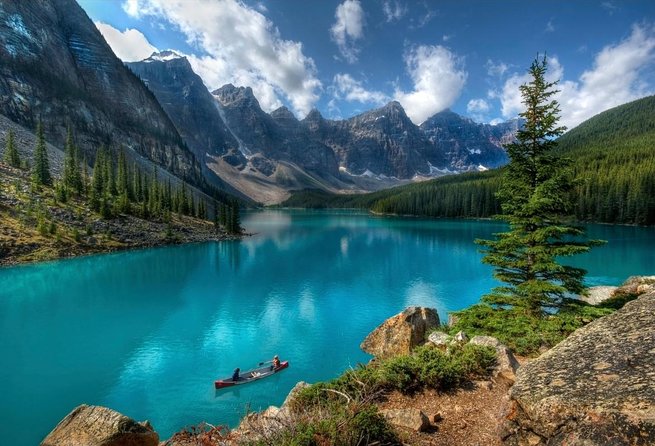
I especially love the way this route balances famous stops with short, doable walks—things like Moraine Lake and Peyto Lake that are worth the camera time, plus glacier country on the Icefields Parkway.
One thing to plan for: the days have long bus stretches and you sleep in hostel dorm-style rooms, so this tour feels best if you’re good with “go-go” pacing and simple comforts.
In This Review
- Key points worth knowing
- Bridal Veil Falls and Hope: the trip starts softer than it looks
- Merritt and the rail history moment at The Last Spike
- Revelstoke: a mountain town night plus optional water time
- Golden Skybridge: your included wow-factor stop
- Entering the Rockies: Lake Louise, Moraine Lake, and the Icefields rhythm
- Columbia Icefield and Jasper Falls: when the mountains feel loud
- Banff on your own: use the free day to match your pace
- Yoho National Park: waterfalls, Emerald Lake, and Takakkaw’s season
- Revelstoke Aerial Adventure Park: a break from walking
- Shuswap Lake pass, Lillooet, and Nairn Falls before Whistler
- Squamish Lil’Wat Cultural Centre and the Sea-to-Sky into Vancouver
- Value and what you’re truly paying for
- Group size, pace, and practical tips for a smoother trip
- Who this tour suits best (and who might be disappointed)
- Should you book Caribou: Discover the Best of the Rockies (8-Days)?
- FAQ
- What is the duration of the Caribou Rockies and Whistler tour?
- Where does the tour start and end?
- Which national parks and areas are included?
- Are meals included in the price?
- What kind of accommodation is provided?
- What activities are included versus optional?
- What time does the tour start?
- What is the maximum group size?
- Is there a minimum age?
- What luggage limits should I follow?
- How soon can I cancel for a full refund?
Key points worth knowing
- Driver-guide guidance keeps timing tight and helps you navigate big sights without stress
- Iconic lakes and glaciers on the Icefields Parkway with short walks and plenty of viewpoints
- Golden Skybridge is included, so you can focus on photos and not ticket math
- Yoho National Park adds variety with waterfalls like Takakkaw (seasonal) and Emerald Lake
- Whistler + Sea-to-Sky Highway closes the loop from mountains to city views
- Hostel dorm-style lodging and active walking mean you’ll pack for comfort and movement
Bridal Veil Falls and Hope: the trip starts softer than it looks
Your day begins at 8:00 am, which means you get an early start and a full day of scenery. The first stop is Bridal Veil Falls Provincial Park, where you’ll do a short walk through a west coast rainforest. It’s a calm opening—cool air, dripping leaves, and a waterfall that doesn’t need hype to deliver.
Then you roll toward Hope, a small town with a big personality. The stop is brief, but it’s a fun contrast: you’re in a mountain corridor town before you’re fully surrounded by the big Rockies. If you like seeing how road-trips connect nature with local culture, this is a good first taste.
You can also read our reviews of more tours and experiences in Vancouver.
Merritt and the rail history moment at The Last Spike
As the route continues, you’ll stop for lunch at Kekuli Café Coffee in Merritt, including an Indigenous lunch. This matters more than it might sound. A trip like this can easily become all photos and no learning, and having a meal connected to local Indigenous presence gives the day a grounded feeling.
Not far from that, The Last Spike Gift Shoppe is a quick history stop. You’ll see the historic site tied to the last railroad spike driven in November 1885 on the Canadian Pacific Railway—an important connection point in how Canada linked coast to coast. Ten minutes is short, but it’s the kind of stop that helps you understand why these highways and towns exist where they do.
Revelstoke: a mountain town night plus optional water time
By the time you reach Revelstoke, you’ve moved from rainforest and history into true mountain country. Staying overnight here gives you a “base” feel before the Rockies intensify. It’s also a nice moment to breathe—there’s time to settle in, relax, and get ready for big sightseeing.
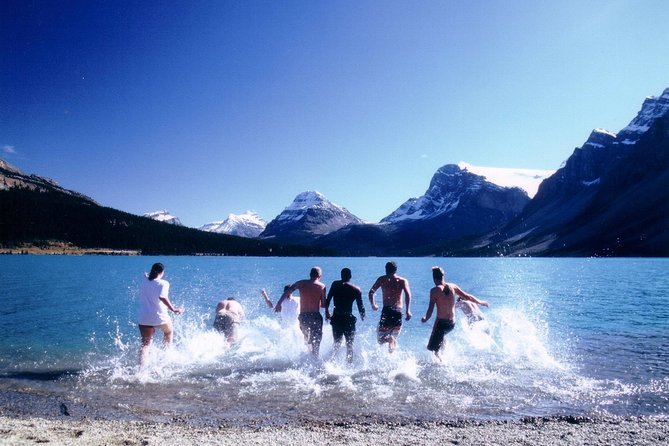
You also get a chance to add optional water activity in Revelstoke with Natural Escapes Kayaking, Canoeing and SUP. Kayaking/canoeing/SUP is not included, but the setting is scenic and the time window is clear. If you’re the type who wants one more active moment instead of another viewpoint, this is a good slot to spend extra.
Golden Skybridge: your included wow-factor stop
After Revelstoke, you’ll head to Golden Skybridge—one of the few places on this trip that’s straightforward and very photo-friendly. The bridge walks out over dramatic gaps and gives you tall suspension-bridge views.
This is included, so you don’t have to decide on value in the moment. Think of it as one reliable “win” day-propeller: even if you’re tired from bus time, you’ll still get that big panorama without extra ticket decisions.
Entering the Rockies: Lake Louise, Moraine Lake, and the Icefields rhythm
The next big stretch brings you fully into the Rocky Mountains, crossing the Kicking Horse Pass into Alberta and Banff National Park. Then the day turns into a classic Icefields Parkway pattern: big lakes, glacier energy, and a string of short photo stops.
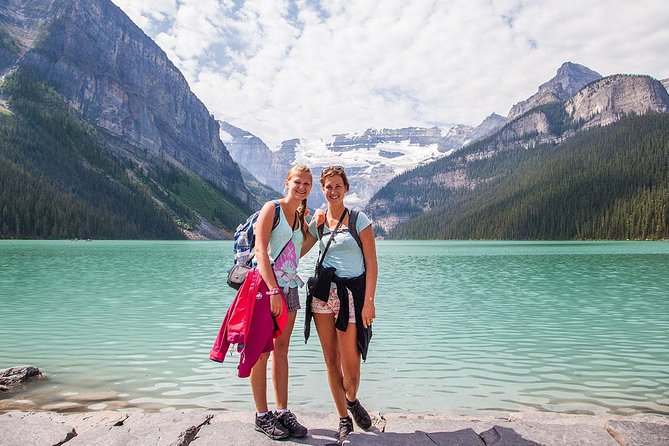
First is Lake Louise, one of those “you get it instantly” places. You’ll have time for about an hour, which is enough to walk, look, and take photos without feeling rushed into the next thing.
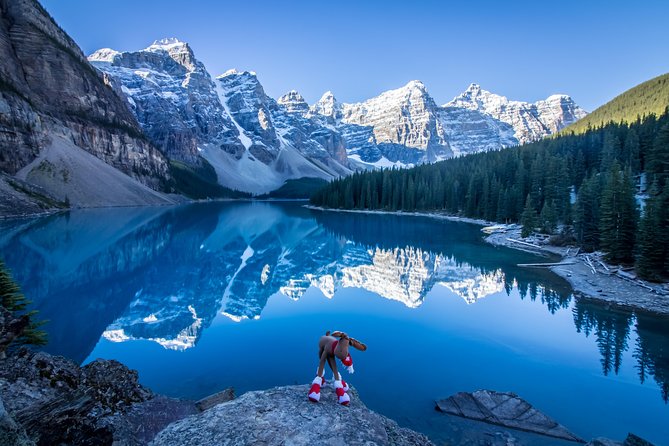
Next is Moraine Lake, which is also known for its bold color and jagged peak backdrop. Here you’ll get a shorter stop, around 30 minutes, but it’s marked as included. This is one of the stops I’d prioritize mentally. With limited time, you’ll get more joy if you go in with a plan: one wide shot, a couple of angles near the viewpoints, then enjoy the rest of the time soaking in the mountains.
Then comes Crowfoot Glacier, followed by Peyto Lake. Peyto Lake is especially memorable because of its distinctive wolf-like outline and bright turquoise water set against peaks. Even with brief stops, it’s the kind of place that rewards looking slowly instead of snapping and moving.
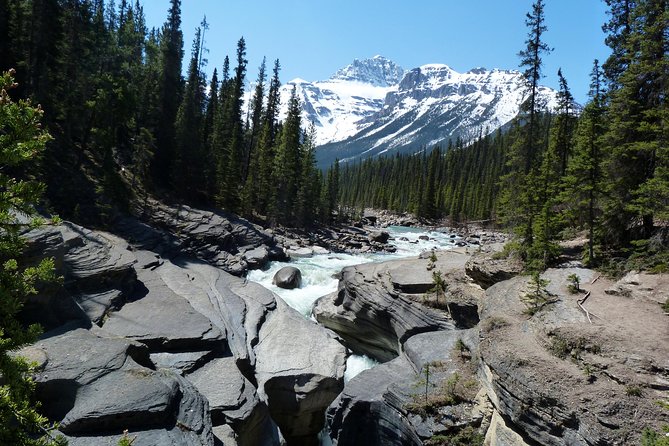
Mistaya Canyon rounds out the day with a short walk to see the Mistaya River carving through rock. The canyon part is quick, but it breaks the “lake, lake, glacier” rhythm and adds texture—water movement, rock layers, and a different type of photo.

Columbia Icefield and Jasper Falls: when the mountains feel loud
You’ll start the next day at the Columbia Icefield, the biggest glacier area in the Rocky Mountains region, with an area cited at 325 square kilometers. You’ll take a short hike to the toe of the Athabasca Glacier. This is one of those experiences where you notice scale in a real way. Ice at the toe level feels close enough to register as something alive and powerful, not just a background.
After that, you move into Jasper National Park, where waterfalls do much of the storytelling.
Sunwapta Falls and Canyon offers a cascade dropping through a dramatic gorge, with about 30 minutes here. Athabasca Falls follows with only around 15 minutes. That sounds short, but waterfall stops work best with quick focus: arrive, look, get your photos, then move on before the crowd energy shifts.
That mix—one longer waterfall stop plus a quick iconic one—keeps the day from dragging while still giving you the “Jasper feel.”
Banff on your own: use the free day to match your pace
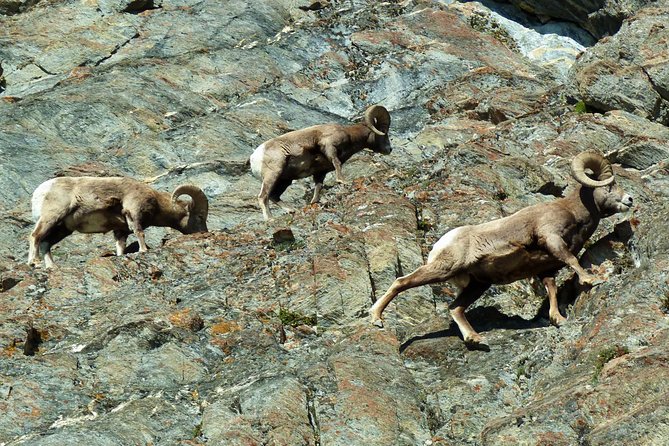
One day is yours in Banff. This is a real value piece of the itinerary because you get to tailor the day instead of being dragged through another checklist.
You can hike, explore Banff sights, or spend time at breweries and restaurants. If you want adrenaline, the guide can help you choose optional activities like whitewater rafting, canoeing, or mountain biking for extra cost.
This free day is also where I’d suggest you think about logistics: your legs may already be tired after the Icefields Parkway days. Planning one main activity and one easy loop works well. You’ll get more satisfaction than trying to do everything at once.
Yoho National Park: waterfalls, Emerald Lake, and Takakkaw’s season
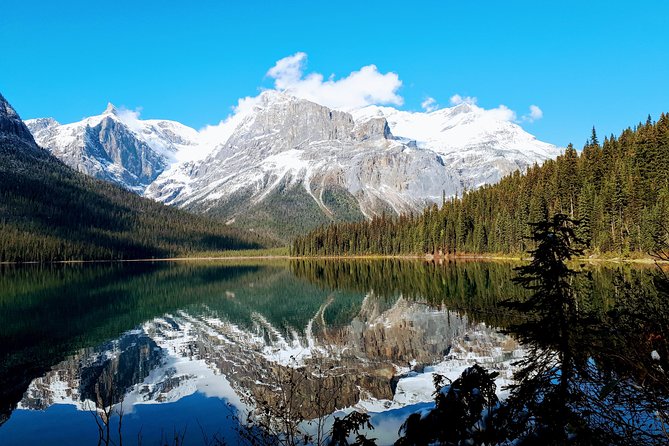
Yoho National Park adds a different flavor from Banff and Jasper: more waterfall energy and calmer lake moments.
Takakkaw Falls is first. It’s seasonal, noted as late June to October. If you’re traveling outside that window, don’t expect the stop to be the same. If you’re in-season, it’s one of the tallest waterfalls in Canada and a strong early-day payoff.
Next is Emerald Lake, with vibrant jade-colored waters and mountain framing. You’ll have about an hour here. This is the stop where slowing down pays off. Look at the way the water color changes with light, then enjoy the quiet feel of an alpine lake setting.
Then you’ll visit Natural Bridge in Yoho National Park—formed when the Kicking Horse River carved a natural arch through stone. The time is short (about 15 minutes), but it’s a good reminder that the parks aren’t just “pretty”—they’re geologic work in progress.
Revelstoke Aerial Adventure Park: a break from walking
After Yoho, the day shifts to action in Revelstoke at Revelstoke Mountain Resort’s Aerial Adventure Park. This one is included and designed for different skill levels: you can swing, climb, jump, and free-fall through a four-story adventure with over 50 obstacles.
You’re not forced into one pace. You choose how far you push. If you’ve spent the previous days doing trails and viewpoints, this is a fun way to spend energy without relying on more driving.
Shuswap Lake pass, Lillooet, and Nairn Falls before Whistler
As you head toward the Sea-to-Sky region, the route includes scenic pass-through moments and a couple of quick nature stops.
You’ll pass Shuswap Lake (crystal-clear waters and shoreline views) and Lillooet, described as a historic town between the Fraser River and mountain scenery. These are “on the way” stops, but they help the overall trip feel like a continuous journey instead of a set of separate destinations.
Nairn Falls Provincial Park is the last nature stop before Whistler. It’s a short visit, around 15 minutes, with a waterfall framed by lush forests and cliffs. After long days, these smaller stops are a relief—you get photos without another long walking commitment.
Then you reach Whistler, where the final night focuses on nightlife options—bars and clubs. It’s not the type of night where everyone has to go hard. Even if you prefer an early night, the key is that Whistler gives you variety in how you end the trip.
Squamish Lil’Wat Cultural Centre and the Sea-to-Sky into Vancouver
On the last day, you start with culture and education rather than another quick roadside photo.
At the Squamish Lil’wat Cultural Centre, you’ll spend about two hours. You can explore exhibits and learn from art, storytelling, and interactive displays tied to the Squamish and Lil’Wat Nations. This is a thoughtful close after multiple national parks—your trip ends with living culture, not just scenery.
Then it’s back to waterfalls and mountain icons with Brandywine Falls Provincial Park (about 15 minutes), Stawamus Chief Park (around 30 minutes), and Shannon Falls Provincial Park (about 15 minutes). Each stop is short enough to fit a morning plan, but combined they create a satisfying “Sea-to-Sky highlights” run.
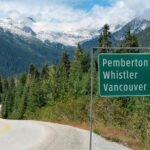
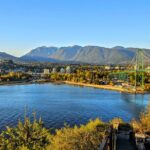
Finally, you return to Vancouver via the Sea-to-Sky Highway along Burrard Inlet. You’ll get coastal mountain-to-city views as you head into the skyline, and then the tour ends back at the meeting point.
Value and what you’re truly paying for
At $2,042.80 per person for roughly 8 days, this tour can feel like a big number. Here’s where the value comes from.
You’re getting 7 nights of hostel dorm-style accommodation (mixed gender), plus meals: breakfast, lunch, and dinner are included. You also get Moose Bus transportation, national park fees, and entrance to key stops like Golden Skybridge and the cultural centre.
On top of that, there’s a professional driver-guide. That’s not fluff. A guide helps keep timing realistic across crowded scenic areas, and they can steer you toward better choices during the Banff free day and optional activity windows.
What you should weigh is the trade-off: hostel dorms and long ride days. If you want privacy, quieter mornings, and lots of downtime, this setup may not match your style. If you want shared energy, strong “see a lot” momentum, and nature that’s hard to replace, it’s easier to justify the cost.
Group size, pace, and practical tips for a smoother trip
The tour runs with a maximum of 24 people. That’s a sweet spot: enough people to form a friendly group vibe, but not so many that you feel like you’re lost in a crowd every stop.
Physical fitness is described as moderate. Translation: you’re doing short walks and viewpoints repeatedly, not long multi-hour hikes every day. Still, with 8 days and multiple stops, your legs will notice it.
Bring for all weather. The tour operates in all weather conditions, and you’ll be outside for short walks and photo breaks. A light rain layer, a warm layer, and shoes with grip make a big difference.
Also plan for luggage. You’re restricted to one reasonably sized main backpack, bag, or suitcase in the luggage compartment, up to 23 kg (50 lbs) and up to 158 cm linear dimensions. Plus you can bring one small daypack in the passenger compartment. If you exceed limits, you may be refused at departure or charged an overweight/oversize fee.
Finally, this tour starts early (8:00 am). If you’re the type who needs a slower morning, you’ll want to sleep well the night before and keep your packing simple.
Who this tour suits best (and who might be disappointed)
This tour fits you if:
- You want an organized route through Yoho, Jasper, Banff, and Whistler without renting a car
- You like short walks paired with major viewpoints
- You enjoy learning through experiences, including time at the Squamish Lil’Wat Cultural Centre and an Indigenous lunch stop
- You’re comfortable with hostel dorm-style lodging and shared group rhythm
You might skip it if:
- You need lots of private space and quiet recovery time
- You hate long bus days
- You travel with bulky luggage or you’re unwilling to manage the 23 kg limit
Should you book Caribou: Discover the Best of the Rockies (8-Days)?
I think you should book if you want a high-impact western Canada loop that mixes iconic nature with real Indigenous learning—without making you do the planning. The included Golden Skybridge entrance, the glacier day on the Icefields Parkway, and the guided structure help make the experience feel efficient and lower stress.
I’d reconsider if your ideal trip is slow, private, and flexible day-to-day. This one moves. It’s built for action, group energy, and quick stops that still add up to a lot of “wow” moments.
If you’re ready to match that pace and pack within the luggage rules, it’s a strong value for the amount you cover.
FAQ
What is the duration of the Caribou Rockies and Whistler tour?
It runs for 8 days (approx.).
Where does the tour start and end?
The tour starts in Vancouver, Canada and ends back at the meeting point.
Which national parks and areas are included?
You’ll visit Yoho, Jasper, and Banff national parks, plus Whistler, along with the Sea-to-Sky Corridor stops.
Are meals included in the price?
Yes. Breakfast, lunch, and dinner are included.
What kind of accommodation is provided?
You get 7 nights of accommodation in mixed gender, hostel dorm-style rooms.
What activities are included versus optional?
Included features listed are entrance to Golden Skybridge, national park fees, and paddleboarding on Skaha Lake. There are also optional activities mentioned such as kayaking/canoeing/SUP in Revelstoke and options like rafting/canoeing/mountain biking during the Banff free day.
What time does the tour start?
The start time is 8:00 am.
What is the maximum group size?
The tour has a maximum of 24 travelers.
Is there a minimum age?
The minimum age is 18 years.
What luggage limits should I follow?
Each person can bring one main backpack/bag/suitcase up to 23 kg (50 lbs) with maximum linear dimensions of 158 cm, plus one small daypack carried in the passenger compartment.
How soon can I cancel for a full refund?
You can cancel up to 6 days in advance for a full refund (you must cancel at least 6 full days before the experience’s start time).