REVIEW · VANCOUVER
Foxtrail Scavenger Hunt – Compass Trail Vancouver
Book on Viator →Operated by Foxtrail Canada · Bookable on Viator
If you like puzzles on foot, this is fun. Foxtrail Compass Trail turns Yaletown into a game board with AR clues and team code-breaking. I like that it works for both first-timers and locals, because you’re not just following directions, you’re spotting details you’d usually miss.
Two things I really like: the mix of physical clues plus app puzzles, and the fact you choose your own pace instead of keeping up with a group. One drawback to keep in mind: if a clue box is missing or hard to reach, you might hit a dead end and lose time unless you use the hints and keep moving.
In This Review
- Key things to know before you go
- Foxtrail Compass in Yaletown: what the 3-hour hunt feels like
- Getting started at 808 Beatty St: mobile ticket, phone, and your team
- How the app puzzles work: AR, codes, and mechanical clue steps
- Route highlights: Yaletown streets, a fence clue, and a tricky waterfront bench
- Start area: first clue hunt near the meeting point
- The fence-and-box moment: where time can slip
- The “bench with no seat” style detour
- The finish: back to 808 Beatty St
- Pace and difficulty: keeping adults, teens, and kids engaged
- What to bring (and what to skip) for Vancouver weather and phone-first play
- Value for money: why a self-guided puzzle walk beats a standard city tour
- Common frustrations (and how to avoid dead ends)
- Who should book Compass Trail, and who should skip it
- Should you book Foxtrail Scavenger Hunt: Compass Trail Vancouver?
- FAQ
- FAQ
- How long is the Foxtrail Compass Trail scavenger hunt in Vancouver?
- Where does the experience start and where does it end?
- What do I need to play the game?
- Is this a guided tour or self-guided?
- What language is the experience offered in?
- How big is the group?
- Are service animals allowed?
- Is there a cancellation window for a full refund?
Key things to know before you go
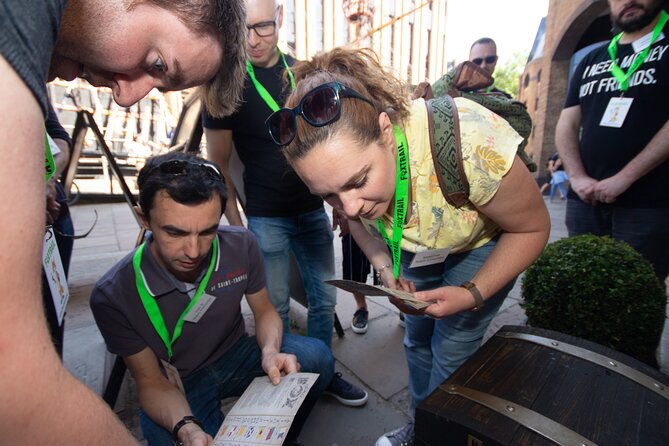
- Self-guided, choose-your-pace walking: no racing, no waiting for a tour bus of doom.
- Phone required: you’ll want at least one smartphone with internet and your confirmation email ready.
- AR and puzzle toolkit in the app: you’ll solve codes and hunt hidden messages using the mobile game.
- Starts and ends at 808 Beatty St: easy to plan around, even if you’re taking transit.
- Small limit (up to 6 people): more like a game crew than a big organized group.
- Mostly family-friendly, with some challenge: kids can do it, but a few puzzles may need help.
Foxtrail Compass in Yaletown: what the 3-hour hunt feels like
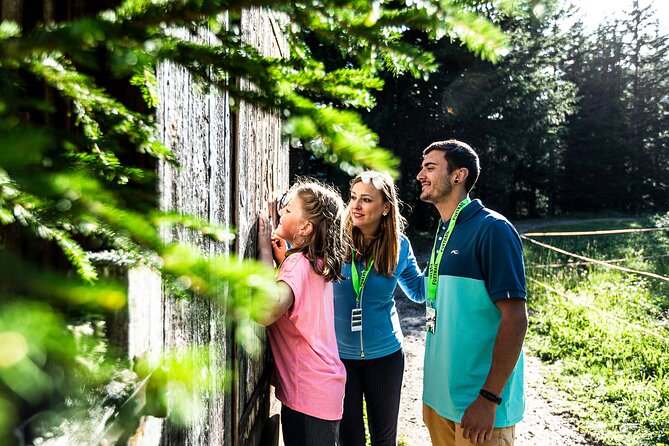
Foxtrail Compass Trail Vancouver is a self-guided walking adventure that blends scavenger hunting with escape-game style tasks. You’ll follow clues around central Vancouver, pause for puzzle steps, and work as a team to break codes and find hidden messages.
The big idea is simple: you spend about 3 hours outside, but you’re not doing a standard sightseeing walk. You’re looking for small things at the right time. That makes the experience feel sharper, like you’re being guided by curiosity instead of a timetable.
And yes, this one starts in Yaletown. That matters. You get the walkable feel of the neighborhood right away, plus plenty of street life around you if you need a quick reset.
You can also read our reviews of more tours and experiences in Vancouver.



Getting started at 808 Beatty St: mobile ticket, phone, and your team
Your game starts and ends at 808 Beatty St, Vancouver, BC V6B 1C2. You’ll receive confirmation at the time of booking, and the key is to keep that confirmation email on your phone.
You also need at least one smartphone with an internet connection. The Compass Trail experience is app-driven, so don’t plan on playing offline. Bring a charger plan too. In a phone-first game, low battery is a real villain.
This is set up for teams, with a small maximum group size of up to 6 travelers. That small cap is good value for you because the game is designed to work well without turning into a crowded scramble.
Practical tip: if you’re going as a group of two to four, you’ll usually be faster because roles come naturally. One person can read clues, one can check the app, and one can sanity-check routes. It feels silly until you realize it works.
How the app puzzles work: AR, codes, and mechanical clue steps

The core gameplay is a mix of:
- finding physical clue elements on the street, and
- solving puzzle steps in the mobile app.
The app toolkit includes AR-style elements, plus code breaking and message finding. You’ll also run into mechanical games tied into the hunt logic. Those parts are what keep the walk from turning into a repetitive scavenger routine.
Even if you’re not a puzzle expert, the game is built around teamwork. You’ll be asked to connect clues, compare what the app shows you, and then test your solution at the next location.
One useful feature mentioned in support-style responses: there’s a hint system if you get stuck. That can save your time and keep the mood positive when a clue is unclear or you’re tired.
Route highlights: Yaletown streets, a fence clue, and a tricky waterfront bench
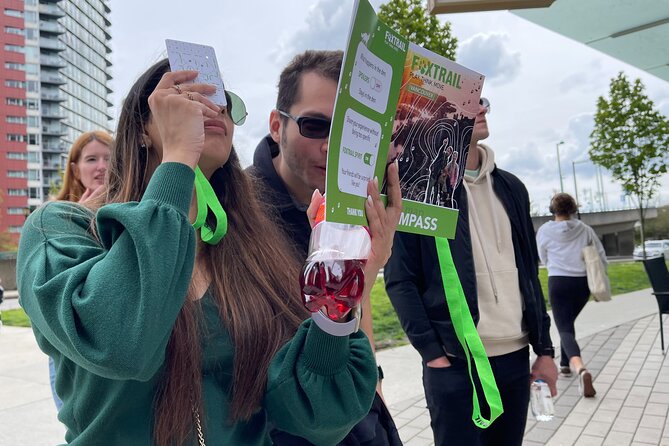
You don’t get a sit-and-watch itinerary. You’re walking and reacting to what the game asks for. Still, you can expect the experience to move through a mix of street corners, waterfront-adjacent spots, and some slightly awkward terrain where you may have to move around barriers.
Here are the main “types” of stops you’ll likely hit, based on what the experience asks you to do in the field:
Start area: first clue hunt near the meeting point
Right away, you’re in detective mode. The first tasks are usually about getting oriented: what to scan, what to look for, and how to use the app toolkit. This is where teams often either click quickly or spend extra minutes figuring out the game rhythm.



The fence-and-box moment: where time can slip
One specific difficulty that can happen on outdoor hunts is a physical clue that’s missing, unreachable, or just plain not where it should be. For example, there can be a clue step involving a fence/parking-lot type area. If the clue box isn’t accessible, you end up doing extra walking to compare the hint picture with the real-world spot.
If you hit that kind of snag, don’t burn 20 minutes. Use hints, compare carefully, and move on if you can’t locate the intended element.
The “bench with no seat” style detour
Another puzzle step can involve a waterfront-adjacent bench area where you may need to approach from an angle. In one reported scenario, the bench front had barbed wire and the team needed to go up and around and down a steep hill to inspect the other side.
This is the kind of moment where the game becomes less about brains and more about practical footwork. It does not mean it’s dangerous, but it does mean you should wear shoes with grip and expect uneven access points.
The finish: back to 808 Beatty St
Like many self-guided games, the end is a return to the starting point. That keeps the logistics easy. You’re not trying to solve the last riddle while searching for a subway exit you can’t find.
Pace and difficulty: keeping adults, teens, and kids engaged
Compass Trail is designed to keep people in the zone. The puzzle balance aims to stay engaging without feeling like every step is either pure hiking or pure math.
From real-world use, the riddles can be challenging at times, and that includes for children. The good news: kids can still participate and often enjoy the game mechanics and finding clue locations, even if they need a hint or two.
My advice on pacing: treat it like a team sport, not a test. If your group splits on directions, you’ll lose time. If you keep a simple rule like One Person Reads, One Person Checks the App, you’ll move faster and keep everyone calmer.
Also, you can choose your own pace. That means if you start slow, it’s usually still recoverable. If you start fast and ignore the terrain, you might arrive at a puzzle step tired and annoyed. Save your energy.
What to bring (and what to skip) for Vancouver weather and phone-first play
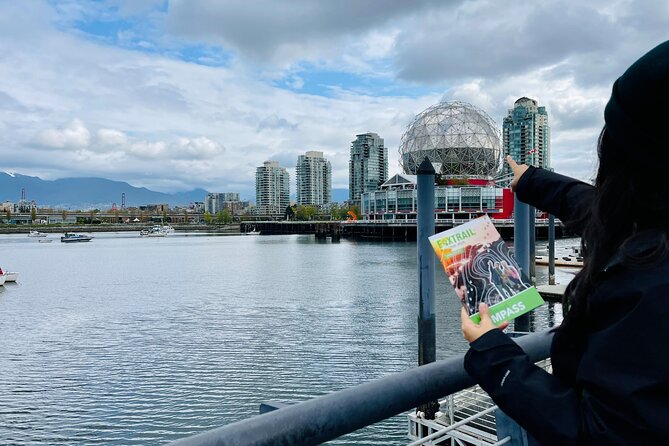
This is an outdoor walking game, so dress for actual Vancouver conditions, not the forecast you hope for. The basics:
- Weather-appropriate clothing
- Comfortable walking shoes
- At least one smartphone with internet
- Your confirmation email on your phone
Skip the fancy shoes. You’ll be moving between clue locations and possibly dealing with terrain changes. Grip matters.
If you’re playing with kids, pack a small snack and water. The game keeps you busy, but breaks still help. If the puzzle step takes longer than expected, hunger turns irritation into quitting.
Value for money: why a self-guided puzzle walk beats a standard city tour
I like this format because it changes how you move through a city. A typical tour gives you facts and a route. This one gives you a reason to look around, then rewards you with small wins.
You also get variety in a short window. You’re outdoors, you’re solving, you’re moving, and you’re re-centering your attention every few minutes. That’s a big reason people like it for friends, families, and group outings that don’t want a lecture style day.
Another value point: you’re not tied to a guide’s schedule. You can slow down for a puzzle, pause for photos, and backtrack if needed.
One more thing: starting in Yaletown puts you in a lively part of town, so your walk doesn’t feel empty between clue steps. Even when you’re concentrating, there’s a Vancouver backdrop to keep the mood light.
Common frustrations (and how to avoid dead ends)
Outdoor scavenger hunts are only as good as their clue reliability. One concern that shows up with this style of game is missing or unreachable clues, which can block completion and add stress.
Here’s how to reduce that risk:
- Start early so you have time to handle a hiccup.
- Bring your hint tool mindset. If you’re stuck, check hints instead of wandering randomly.
- Keep your group together. When people split, one missed clue becomes five minutes of debate.
- If something seems wrong, contact support quickly rather than waiting. Time matters in a game where physical steps drive the experience.
Also, one report mentioned lanyards not being available at the first stop. That’s not a deal-breaker for the game itself, but it’s a reminder: it’s still a real-world outdoor activity with real-world supply issues.
Who should book Compass Trail, and who should skip it
Book Compass Trail if you want:
- an interactive way to see Vancouver beyond the obvious viewpoints,
- a walk you can shape to your group’s pace,
- puzzles with a teamwork vibe,
- an app that adds extra layers through AR-style elements.
Consider skipping if:
- your group hates any chance of dead ends,
- you expect a strictly maintained, perfectly placed museum-style route,
- you have limited mobility and the terrain might be a concern.
Since the experience is designed for most people to participate, many groups will be fine. Still, the best mindset is flexible. This is a game that lives outdoors, so it’s more like a living scavenger hunt than a closed building exhibit.
Should you book Foxtrail Scavenger Hunt: Compass Trail Vancouver?
If you enjoy scavenger hunts, logic puzzles, and short bursts of outdoor problem solving, I think Compass Trail is an easy yes. It’s also a strong choice when you want something active that still feels playful, not just walking.
My deciding checklist for you:
- Do you have a smartphone with internet and the confirmation email ready?
- Are your shoes comfortable for uneven access and possible steep bits?
- Is your group the type that uses hints instead of blaming the puzzle?
If you answered yes to those, you’ll probably have a great time. If your group only wants guaranteed step-by-step perfection, you might find the outdoor clue reality frustrating.
FAQ
FAQ
How long is the Foxtrail Compass Trail scavenger hunt in Vancouver?
It lasts about 3 hours.
Where does the experience start and where does it end?
It starts at 808 Beatty St, Vancouver, BC V6B 1C2, Canada and ends back at the same meeting point.
What do I need to play the game?
You’ll need a smartphone with internet and your confirmation email on your phone.
Is this a guided tour or self-guided?
It’s a self-guided walking adventure where you choose your own pace.
What language is the experience offered in?
The experience is offered in English.
How big is the group?
There is a maximum of 6 travelers.
Are service animals allowed?
Yes, service animals are allowed.
Is there a cancellation window for a full refund?
Yes. You can cancel for a full refund if you cancel at least 24 hours in advance. Cancellation is free, and changes within 24 hours aren’t accepted for a refund.