REVIEW · VANCOUVER
Gastown, Chinatown & Granville Island – Vancouver Bike Tours
Book on Viator →Operated by Vancouver Bike Tours · Bookable on Viator
One of Vancouver’s best shortcuts is pedaling. This 3-hour small-group ride strings together Gastown, Chinatown, False Creek, and Granville Island, so you get a real feel for the city without a bus. I especially liked seeing the steam clock and Steamcock moments in Gastown, and the quick, story-filled stops with local guide Jeremy Catherall. One thing to consider: the route is about 18 km (11 miles), so you’ll want a moderate fitness level and arrive ready to pedal.
What makes this tour work is the pacing and the variety. You go from old-neighborhood architecture to waterfront public art, and then you get short, useful time at Granville Island to snack, browse, and choose what to return to later. The group max is 8, which keeps the ride calm and makes it easier to ask questions on the go. If you hate tight time windows, plan to do your slow wandering after the tour ends.
In This Review
- Key Highlights You Can Expect
- A Smooth Downtown-to-Waterfront Loop (No Guesswork)
- Road Bike Time: 18 km, Moderate Fitness, and Real-World Comfort
- False Creek Seawall Views, Public Art, and a Clean Route Plan
- Gastown Icons, Chinatown Streets, and Strathcona’s “Old Vancouver” Feel
- Yaletown Roundhouse and the Rail History Thread
- Vancouver Biennale Stops: Art on the Move
- Olympic Village Stops and the Water-Connection Finale
- Granville Island Public Market: Short Time, Good Use
- The Aquabus Ferry Crossing: A Tiny Change of Pace
- What Makes the Guide Experience Feel Personal
- Price Value: What You’re Really Paying For
- Should You Book This Vancouver Bike Tour?
- FAQ
- Where does the tour start?
- What time does it run?
- How long is the bike tour?
- Is the tour good for beginners?
- What’s included in the price?
- Is the ferry ride included?
- What are the major stops?
- Do I need to bring anything?
- Is there an age limit?
- Is it canceled for bad weather?
Key Highlights You Can Expect
- Small group of up to 8 riders, so the guide can keep things moving without losing people
- Road bike + helmet + water bottle included, which makes the afternoon feel low-stress
- False Creek Seawall public art route, with stops at places like Olympic Village and Sunset Beach
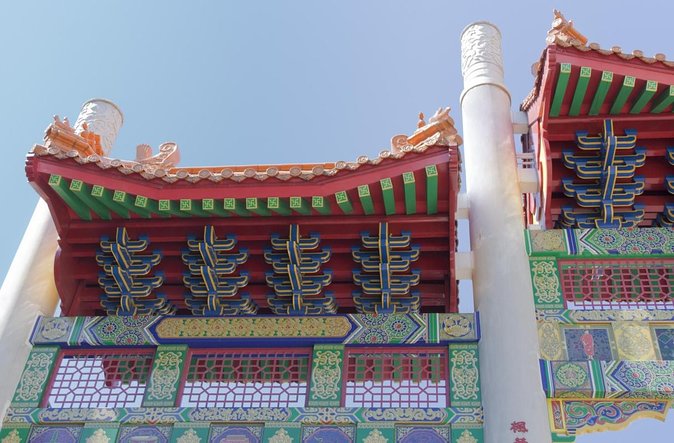
- Gastown and Chinatown on the same loop, including icons like the Gassy Jack statue and the Woodwards building
- Granville Island Public Market time, plus a short Aquabus ferry crossing when available
A Smooth Downtown-to-Waterfront Loop (No Guesswork)
If you only have a few hours to get oriented, this bike tour is a smart move. It’s designed as a loop that links multiple Vancouver “worlds” together: the heritage streets of Gastown, the layered cultural streets of Chinatown, the homey lanes of Strathcona, and then the open-air waterfront of False Creek that leads you straight toward Granville Island.
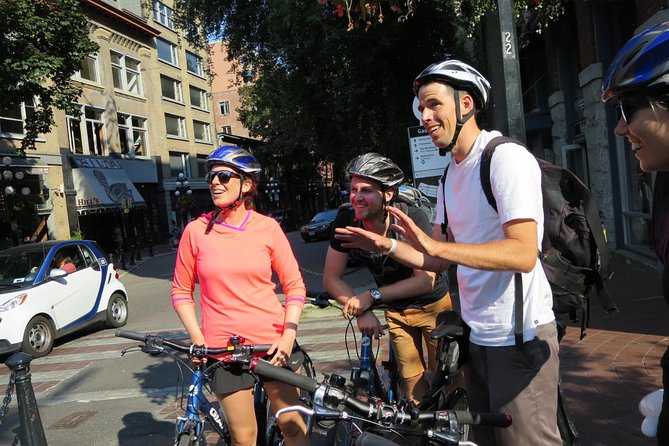
I like that it’s not just pretty views. You actually get context. The guide’s job is to connect what you’re seeing to why it matters, and you feel that in the way the stops are picked. For example, Gastown isn’t a quick photo stop and run. You ride through the oldest neighborhood and get time at major icons like the Gassy Jack statue, the Gastown Steamclock, the Gastown Steamcock, and the Woodwards building. Those are the names you’ll keep hearing around town, so learning them while you’re there helps.
The other reason this tour earns its spot on a first or second day is how it sets up your next choices. A tour like this doesn’t try to replace your whole trip. It helps you decide what to revisit on your own. Afterward, you’ll have a clearer mental map of where the city’s energy sits, where the quieter corners might be, and which stops you want to linger at.
One more practical win: it’s mobile ticket and starts from a specific meeting point, with no hotel pickup. That keeps it simple. You show up, get fitted for your bike, and ride.
You can also read our reviews of more cycling tours in Vancouver
Road Bike Time: 18 km, Moderate Fitness, and Real-World Comfort
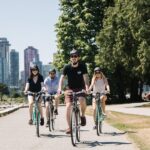
Let’s talk about the one reality check: this is a real cycling outing. You’re looking at about 3 hours and roughly 18 km (11 miles). It’s not a casual stroll. The guidance calls for a moderate physical fitness level, which usually means you should be comfortable biking for stretches rather than just “spinning around the block.”
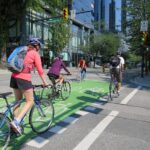
The good news is you’re not on your own. You get a road bike, a helmet, and a water bottle. That matters because it removes the two big hassles that can ruin bike plans: figuring out equipment and worrying about hydration. Also, the tour runs with a small group max of 8, which helps the pace stay controlled and makes it easier to manage stops.
You’ll want to arrive 15 minutes early for sizing and paperwork. Bike fit isn’t a tiny detail when you’re riding downtown and along the seawall. And yes, the tour requires riders to provide height information at booking, which is the clue that they take fitting seriously.
The tour also runs in all weather conditions, so plan for that. If it’s rain or cold, dress for it. This is Canada, and Vancouver weather likes to change moods fast. Sunscreen and sunglasses are recommended, too. You’re moving through open waterfront areas where the light can be bright even when the air feels cool.
One small downside that matters day-of: there are no bathrooms on site. There’s a Starbucks across the street where you can grab a coffee or use facilities before you start. So come ready to ride, not scrambling midway.
False Creek Seawall Views, Public Art, and a Clean Route Plan
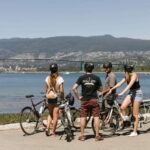
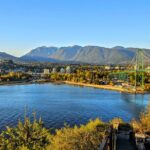
The heart of the ride is the False Creek corridor. You’ll use the False Creek Seawall as the main transportation path, which is one of the most pleasant ways to experience Vancouver on two wheels. The seawall gives you a consistent line through the city’s waterfront, and that consistency makes the tour feel efficient.
Along the way, you’ll see a mix of public art and landmark areas, including the Stadium District, Sunset Beach, Olympic Village, Charleson Park, and then you’ll head toward Granville Island. Some stops are brief, but they’re chosen with a purpose: they put you in the right visual context so you can connect neighborhoods without needing to read a map the whole time.
There’s also an inukshuk moment that adds a deeper layer beyond the waterfront scenery. You stop at Ilanaaq Inukshuk, with views over Burrard Inlet, the Vancouver Inukshuk, and English Bay. Even if you know nothing about local land and stories, an inukshuk stop gives you a natural pause point. It’s a reminder that this coastline has meaning beyond the skyline photos.
Timing-wise, you’re not stuck for hours on one stretch. Stops are spaced out so you can refocus: ride a segment, stop for a short explanation, look around, and then move on. That flow is part of why people rate this tour so highly. It feels like a guided city walk, except you can actually cover ground.
Gastown Icons, Chinatown Streets, and Strathcona’s “Old Vancouver” Feel
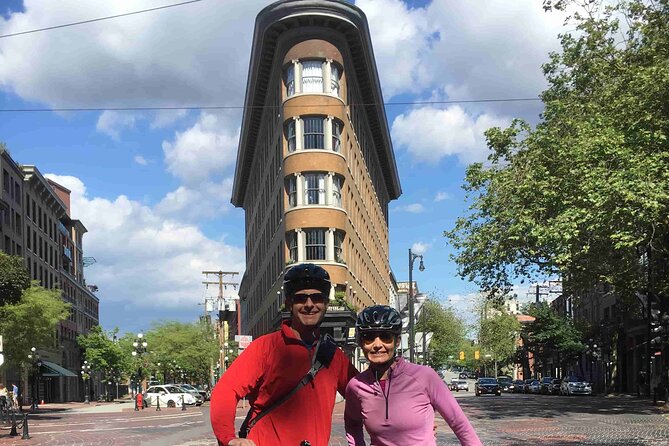
If you want Vancouver’s classic streets without wasting a day on transit, this tour covers a strong chunk of downtown character. You ride through several older neighborhoods and you get specific landmarks, not vague directions.
Gastown is first in the history run. You’ll spend around 20 minutes there, and the points you stop for are the ones that define the neighborhood. The tour highlights the Gassy Jack statue, the Gastown Steamcock, and the Gastown Steamclock, plus it rides past the Woodwards building. The Steamclock moment is the kind of stop you’ll remember because it’s visual and timed to the space. And once you’ve seen those elements in person, the next time you walk Gastown you’ll feel like you’re returning, not discovering.
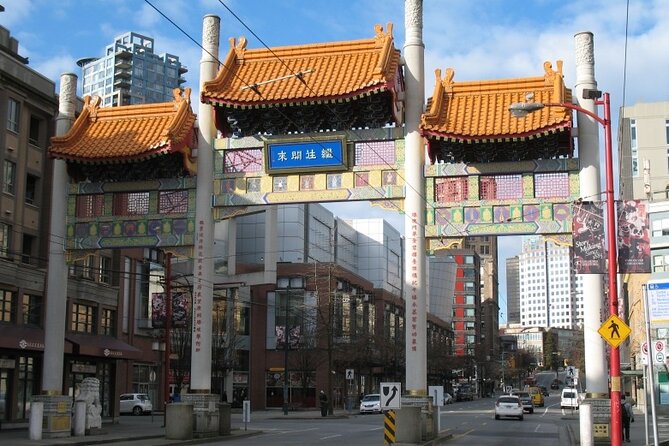
Next comes Chinatown for about 20 minutes. The tour focuses on Vancouver’s historic Chinatown, giving you a brief, guided orientation to the area. Chinatown is one of those neighborhoods where signage, street layout, and architecture tell you a lot fast, so having someone point out what to look for makes your walk-time smarter.
Then you move into Strathcona, the oldest residential neighborhood. You’ll get about 30 minutes there, with stops that include the Hendrix House, a Vancouver Special, and the home of Mary Lee Chan. Those names matter because they’re specific. Instead of generic “this neighborhood is interesting,” you’re seeing Vancouver through particular homes and housing styles. That’s also where the tour’s small-group format pays off. Short explanations are easy to hear, and you can ask questions while you still have your legs warmed up for the next stretch.
Yaletown Roundhouse and the Rail History Thread
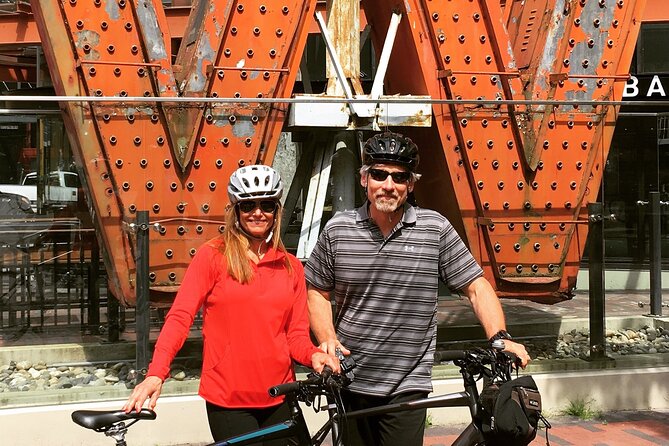
One of the best ways to avoid “random sightseeing” is when a tour has a theme. This one does, at least for a few minutes at a time.
In Yaletown, you stop at the Yaletown Roundhouse for a short talk on Vancouver’s rail history. The stop is brief (about 15 minutes), but it’s a good break from purely neighborhood walking cues. Rail history ties into how the city grew, how neighborhoods formed, and why certain industrial-adjacent areas ended up where they are today.
The practical benefit is that this kind of stop helps your brain file information while you’re still in motion. You’re not waiting until the end of the day to connect dots. You’re building a little mental timeline as you ride.

Vancouver Biennale Stops: Art on the Move
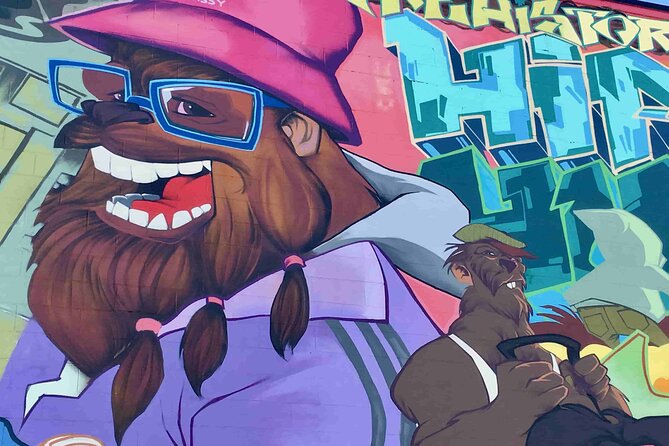
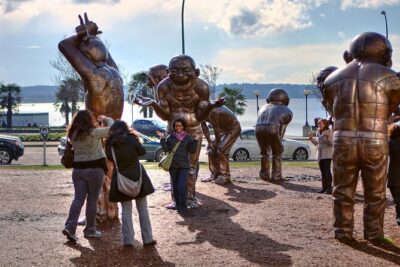
Art fans will like this portion because it’s not confined to one museum stop. You’ll see installations tied to the Vancouver Biennale, with examples that include Engagement Rings, 217.5 Arc x 13, Giants by Osgemeos, Trans Am Totem, and Acoustic Anvil.
You’re not meant to spend hours studying each piece here. The tour uses these installations as quick anchors so you can recognize what you’ve seen if you come back later. It’s also a way to experience contemporary Vancouver without turning your whole afternoon into gallery time.
One smart thing about making art part of a cycling route: you can spot context. You see the installations in relation to streets, sidewalks, and waterfront edges. That’s different from looking at art with a wall and a label and nothing else around you. You’ll come away with the feeling of how Vancouver places creativity into everyday spaces.
Olympic Village Stops and the Water-Connection Finale
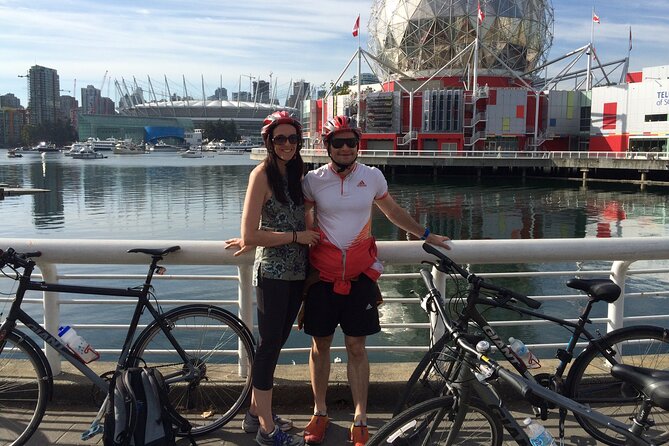
A quick pass through Olympic Village caps the waterfront-to-stories track, showing the Vancouver Athlete’s Village for the 2010 Winter Olympics. It’s only about 5 minutes, but it’s another “named place” stop that helps your orientation. You’ll also be passing Sunset Beach on your way back to the bike shop, which is a fitting ending because it’s where the ride turns calm and scenic again.
By the time you reach Granville Island, you’ve built a complete loop: old neighborhoods, cultural streets, waterfront art and parks, then a lively market area. The tour keeps that final segment short enough that you still have energy for exploring after you return.
Granville Island Public Market: Short Time, Good Use
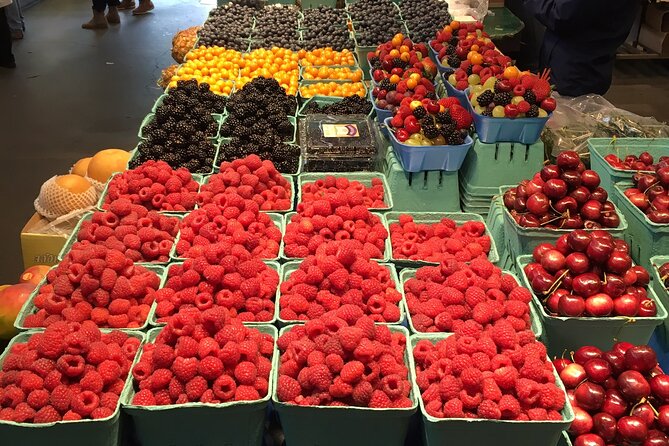
Granville Island is where you get to switch from biking to wandering. The tour includes time at the Granville Island Public Market and around the island area. You’ll have about 10 minutes to explore the market, and then you get additional time on Granville Island with another exploration window (the itinerary lists another 20 minutes segment that centers on locally made arts and crafts items).
Here’s the trick: don’t try to see everything. Use the market time to sample the vibe and pick one or two things you actually want. Even if you’re not buying, look for what stands out to you because that’s what you’ll remember and come back for later.
If you want a snack, this is the moment. If you’re the type who loves photos, this is also the moment to slow down your brain and just look. The tour doesn’t trap you there. It gives you enough time to pick a direction for the rest of your day.
The Aquabus Ferry Crossing: A Tiny Change of Pace
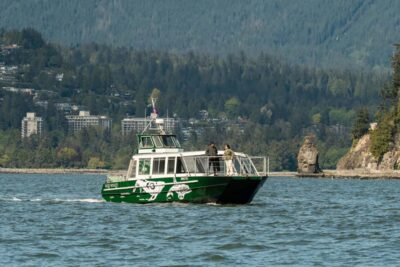
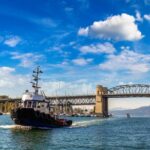
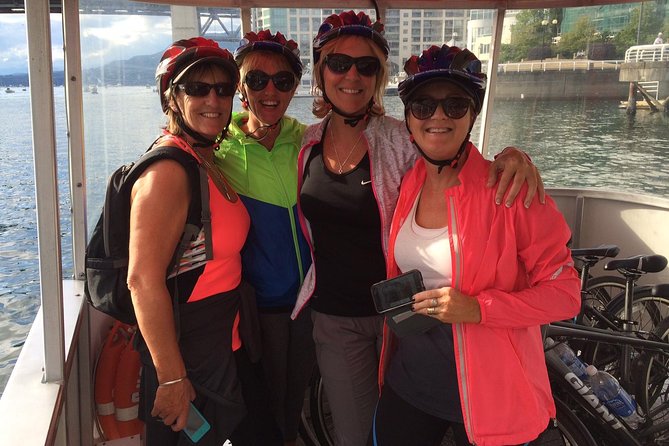
Part of the tour’s charm is that it breaks up the bike ride with water. You catch a short Aquabus water taxi across False Creek. It’s included, and the itinerary frames it as a quick ferry hop rather than a long boat trip.
Even a brief crossing does two helpful things. First, it gives your legs a rest. Second, it changes perspective. From the water, you can see how the waterfront spaces connect, and then when you’re back on land you understand the route better.
What Makes the Guide Experience Feel Personal
The standout in the ride isn’t just the route. It’s the way Jeremy Catherall runs it. People consistently highlight that he’s friendly, respectful, and tuned in to what the group wants. That flexibility shows up when you’re deciding what to ask about and how long to pause at certain spots.
You’ll also notice the storytelling style: local context tied directly to what you see in the street. That keeps the ride from turning into a list of names. It becomes a moving conversation about Vancouver’s neighborhoods, art, culture, and how the city relates to its First Nations presence.
Small-group size matters here. With up to 8 riders, the tour can keep a human pace. And when the ride is comfortable, you’re more likely to pay attention instead of just trying to “survive the schedule.”
Price Value: What You’re Really Paying For
At $74.35 per person, this tour isn’t the cheapest thing on the board. But for the time you get, it’s strong value.
You’re paying for:
- a professional local guide
- a road bike plus helmet and bottled water
- the small-group format (max 8)
- and transportation elements that include an Aquabus ferry crossing
You also don’t have to worry about extra admission fees at the stops you visit since entry for these components is free within the tour structure. Hotel pickup isn’t included, but that’s normal for a downtown starting point near public transit. In exchange, you avoid time lost waiting around.
The biggest value is your time. In 3 hours, you cover a serious slice of Vancouver that would take multiple transit trips if you tried to do it on your own. If you want a “get oriented fast” activity that still feels real, this price makes sense.
Should You Book This Vancouver Bike Tour?
Book it if:
- You want a fast way to learn the city through neighborhoods plus waterfront
- You like guided stops with specific landmarks, not just general sightseeing
- You want to leave with a shortlist of places to revisit later (Gastown icons, Granville market, False Creek art areas)
Skip it or think twice if:
- You’re not comfortable biking for about 18 km (11 miles) at a steady pace
- You really need long, unstructured time at each stop (this tour is paced for coverage)
If you’re choosing a first-day or second-day activity, this one is built for that role. You’ll get your bearings quickly, see the major anchors, and walk away with a smarter plan for the rest of your Vancouver days.
FAQ
Where does the tour start?
The tour starts at 1754 Davie St, Vancouver, BC V6G 1W3, Canada.
What time does it run?
The start time is 2:00 pm.
How long is the bike tour?
It runs for about 3 hours.
Is the tour good for beginners?
It requires a moderate physical fitness level and is based on an 11-mile (18-km) ride, so it’s better if you’re comfortable biking for a few hours.
What’s included in the price?
It includes a professional local guide, use of a bicycle, helmet, bottled water, taxes/fees/handling, and a small-group bike tour.
Is the ferry ride included?
A small Aquabus water taxi across False Creek is included, and the tour also notes that ferry ride inclusion can depend on availability.
What are the major stops?
You’ll ride through areas including Gastown, Chinatown, Strathcona, Yaletown, Olympic Village, False Creek, and you’ll spend time at Granville Island Public Market and Granville Island.
Do I need to bring anything?
Come ready to ride. The tour notes that there are no bathrooms on site and a Starbucks is across the street. Sunscreen and sunglasses are recommended.
Is there an age limit?
Minimum age is 13 years.
Is it canceled for bad weather?
It operates in all weather conditions, but the experience may be canceled due to poor weather, with a different date or a full refund offered.