REVIEW · VANCOUVER
Vancouver: Gastown, Chinatown & Granville Island Bike Tour
Book on GetYourGuide →Operated by Vancouver Bike Tours · Bookable on GetYourGuide
A bike ride that stitches Vancouver together. This Vancouver tour mixes big waterfront views with tight, local stops, from the scents of Granville Island to the machinery inside the Gastown Steamclock. I especially love the English Bay Seawall stretch for the ocean air, and the Granville Island Public Market for real smells and real people. One drawback to plan around: it’s a solid 3–3.5 hours / 18 km without food included, so you’ll want snacks before or after.
The guide is a big reason this works. Jeremy keeps the pace easy on the flat route while still packing in stories, like the origin legends behind Gastown and the quick cultural stop in Chinatown. It also helps that the group is capped at 10, so you’re not shouting over each other at every photo stop.
You’ll be on a bike the whole time, including a short water crossing by Aquabus. The day moves, but it’s designed to be rideable and not exhausting. Just remember there’s no bathroom at the meeting spot, and you’ll want to arrive ready to go.
In This Review
- Key points worth your time
- A 3–3.5 Hour Ride That Gives You Vancouver Fast
- English Bay to False Creek Seawall: Ocean Air and the Giants Mural
- Yaletown Roundhouse Stop and the Railroad Connection
- Skipping to Gastown: Gassy Jack, the Steamclock, and Woodwards Tower
- Chinatown’s Dr. Sun Yat-Sen Gardens: Calm Inside a Cultural Pause
- Strathcona Pedal Through the Oldest Residential Streets
- Olympic Athlete’s Village to False Creek: Back West with Clear Views
- Granville Island: Slow Roll, Then Market Time
- Aquabus Across False Creek: A Simple Water-Taxi Reset
- What the Price Really Covers (and Why It Feels Fair)
- Who This Bike Tour Fits Best
- A Few Tips to Make the Day Easier
- Should You Book Vancouver: Gastown, Chinatown & Granville Island Bike Tour?
- FAQ
- Where does the tour start?
- What time does the tour begin?
- How long is the tour?
- How far do you bike?
- What’s included in the price?
- Is food included?
- Is there a bathroom at the meeting point?
- What should I bring?
- Is this tour for kids or everyone with mobility needs?
- How big is the group?
Key points worth your time
- English Bay to False Creek Seawall: easy riding with big sky and the Osgemeos Giants mural on the way
- Gastown Steamclock + Gassy Jack stories: a quick slice of the city’s origin myth
- Dr. Sun Yat-Sen Classical Chinese Gardens: a calm pause inside a designed space in Chinatown
- Strathcona + Nora Hendrix house stop: neighborhood details tied to Vancouver’s creative side
- Granville Island Public Market: over 100 stalls, factory remnants, and artisan shops in one area
- Aquabus water-taxi hop: a short crossing that breaks up the ride nicely
A 3–3.5 Hour Ride That Gives You Vancouver Fast
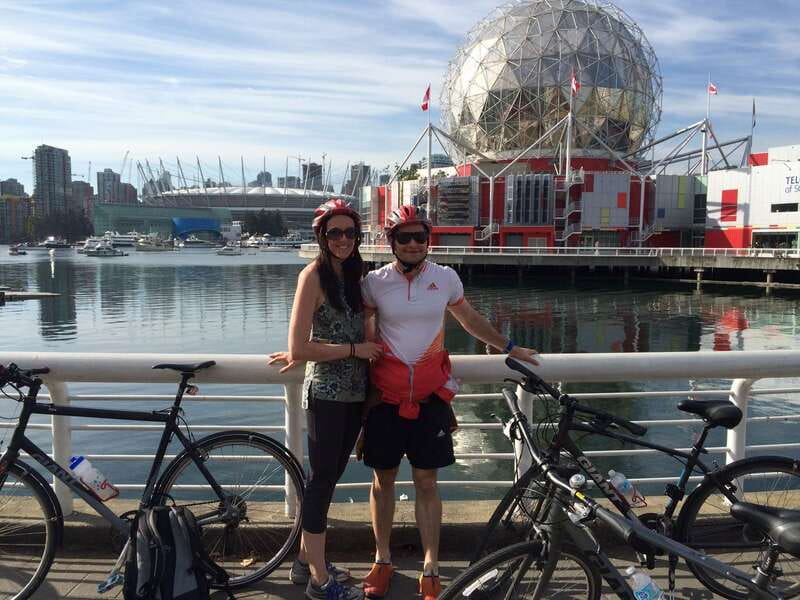
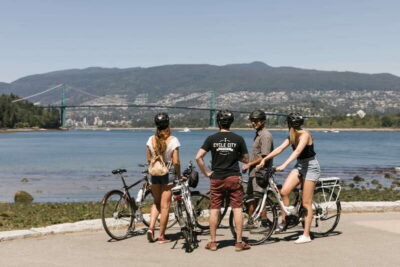
This is the kind of bike tour that helps you get your bearings in a city where neighborhoods feel like separate worlds. You start at the sandy shores of English Bay, then glide east along the beach path, gradually shifting from oceanfront into the downtown core and then out into older residential streets. By the time you reach Granville Island, you’ve seen enough to understand how Vancouver links waterfront, industry, and community spaces.
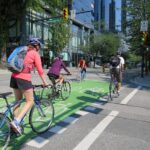
What I like about the pacing is that it stays practical. The route is mostly flat and the distance sits around 18 km, so the challenge is more “keep moving and listen” than “survive a hill.” If you’re comfortable biking for an hour or two in one go, you’ll be fine.
The best part is the balance of famous icons and everyday details. You’ll hit recognizable stops like the Steamclock and Woodwards Tower, but you’ll also get neighborhood context in places like Strathcona, plus a real walk-through time at the Granville Island Public Market.
You can also read our reviews of more cycling tours in Vancouver
English Bay to False Creek Seawall: Ocean Air and the Giants Mural
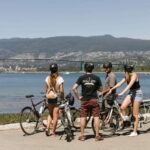
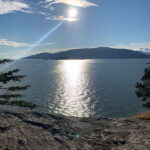
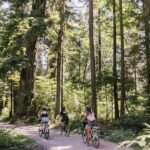
The tour kicks off at English Bay, where you’re already on a sandy waterfront instead of starting in a parking lot. After bike fitting and forms (aim to arrive early), you’ll follow the beach path east. This is a smart way to start because the route naturally warms you up and gets you oriented to Vancouver’s shoreline layout.
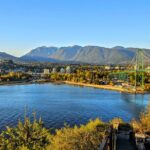
Soon you shift to the False Creek seawall. This is where the scenery does the heavy lifting. You get steady views over the water and city edges, plus a stop for the Giants mural by Osgemeos. It’s the kind of public art that makes sense in a bike tour: close enough to see details, visible enough to break up the ride.
A practical tip: bring sunscreen even if the forecast looks mild. Seawalls and bike paths mean lots of direct light, and the day doesn’t slow down enough to protect you with shade.
Yaletown Roundhouse Stop and the Railroad Connection
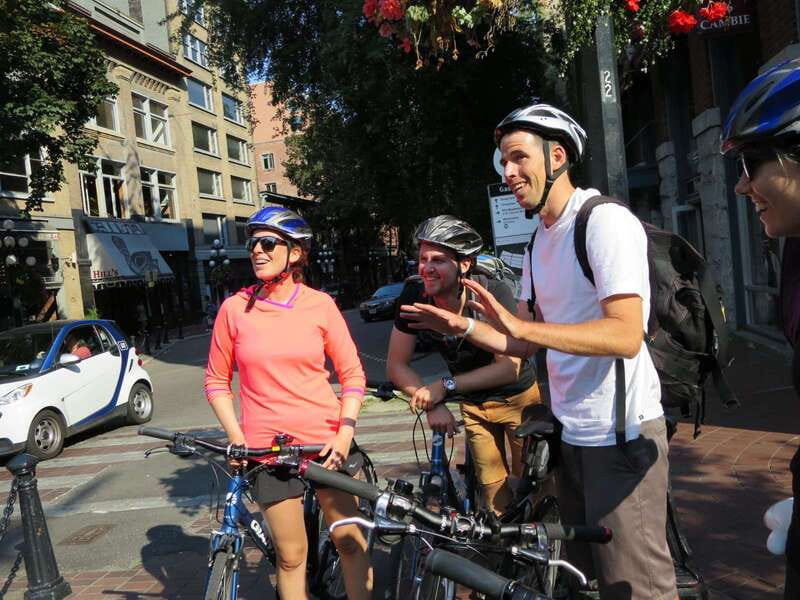
After the seawall, you’ll head into Yaletown for a quick stop at the Roundhouse Community Centre. This is one of those “you learn something without turning it into a museum day” moments. The tour includes a look at the first train across Canada, and you’ll hear how the railroad shaped Vancouver’s development.
Why this stop matters: it connects what you’re seeing now to why the city looks the way it does. You’re moving through districts that feel modern, but the railroad story explains the deeper infrastructure that brought people, goods, and growth.
You’ll then return toward the seawall and bike through the stadium district, keeping to the stretch alongside major venues like BC Place and nearby arenas. It’s a useful transition zone between downtown landmarks and the older grit you’ll hit next.
Skipping to Gastown: Gassy Jack, the Steamclock, and Woodwards Tower
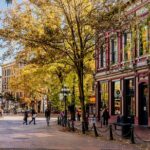
Crossing toward Gastown feels like flipping from “current city” to “origin story.” Gastown is Vancouver’s oldest neighborhood, and the tour frames it through the legend of Gassy Jack. Even if you’ve only heard the name once, you’ll pick up the why behind the vibe of the place: early Vancouver energy, hustling characters, and streets that still feel like they remember.
You’ll stop at the Vancouver Steamclock, where the appeal isn’t just the look. The point is the machinery inside, so you’re getting a brief, hands-on feel for industrial design repurposed into a landmark.
Another stop pairs perfectly with this: you’ll look upward at Woodwards Tower. That upward gaze is easy from a bike pause, and it helps you place Gastown in the bigger downtown skyline instead of treating it like a separate time period.
If you’re taking photos, this is one of the best areas of the ride to slow down. The streets are tight enough that you’ll want to park the bike and frame clean shots rather than trying to shoot while cruising.
Chinatown’s Dr. Sun Yat-Sen Gardens: Calm Inside a Cultural Pause
From Gastown, you slide into Chinatown for a quieter, more contained stop at the Dr. Sun Yat-Sen Classical Chinese Gardens. The tour includes a peak inside, and the atmosphere is noticeably different from the louder street edges outside.
This stop works because it isn’t just a stroll. You’ll also learn about the important role Chinese people played in Canada’s development, then get a quirky local story tied to Chinatown’s culture—an otter tale. That mix is exactly what you want on a bike tour: a designed place plus a human story.
Practical note: gardens mean walking a bit on foot. You’re still on a bike day, but you’ll want comfortable shoes since you’ll likely step away from the saddle more than once.

Strathcona Pedal Through the Oldest Residential Streets
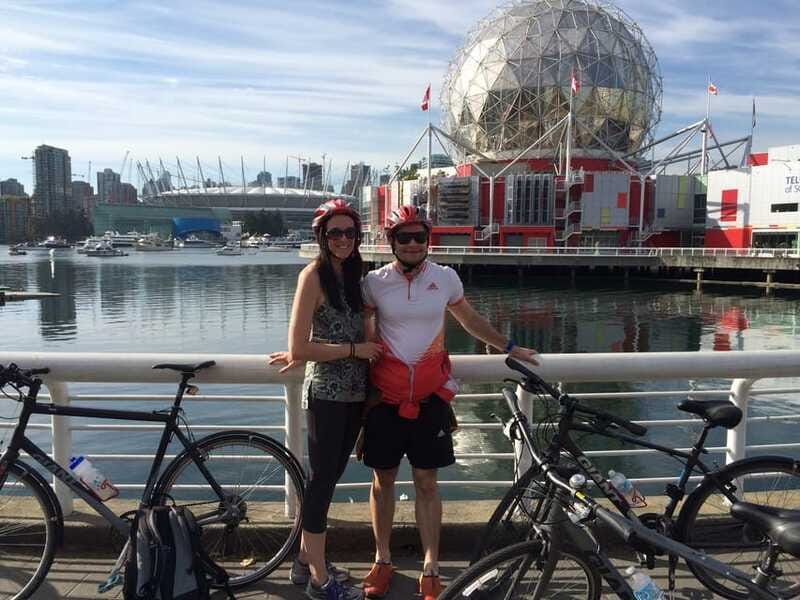
Next comes Strathcona, Vancouver’s first residential neighbourhood. This is where the tour turns from “landmarks” into “neighborhood character,” with streets and housing that feel tied to long-term community life.
You’ll make a pause at a spot in the area tied to Nora Hendrix’s house and hear about Vancouver’s connection to the legendary guitar player. Even if you don’t know the details yet, it adds a creative layer to the day, showing how Vancouver culture isn’t only art in galleries—it’s also family stories and local ties.
Why this segment is so valuable: older neighborhoods can be hard to read from a car window. On a bike, you move at the speed of conversation. That makes it easier to notice small things like street layout, the scale of homes, and how the area feels lived-in.
Olympic Athlete’s Village to False Creek: Back West with Clear Views
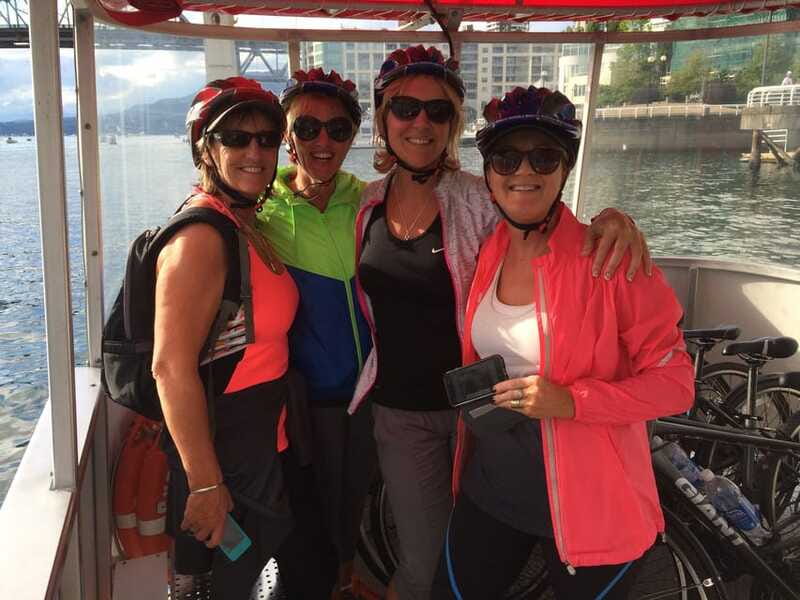
As you return west, the route passes through the Olympic Athlete’s Village area. Then you ride along the south side of False Creek again, which gives you a second look at the water and the city edges.
This matters because it refreshes your sense of direction. A bike tour can feel like a sequence of stops, but the False Creek stretches help you connect them into one continuous map. You’ll see how Vancouver’s waterfront wraps around different districts instead of ending at the downtown core.
Granville Island: Slow Roll, Then Market Time
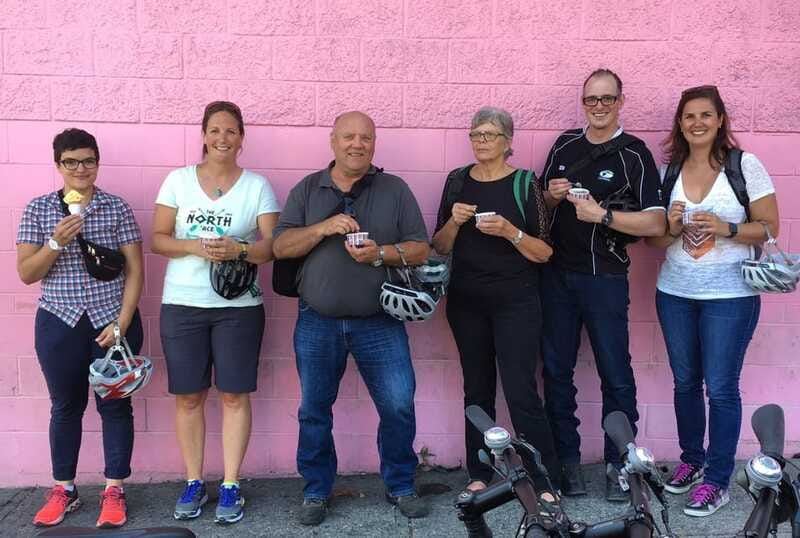
Cycling onto Granville Island feels like changing from “city transit” to “destination wandering.” You’ll do a slow roll past artisan shops and remaining factory elements, which gives the area a working-history feel rather than a themed-only vibe.
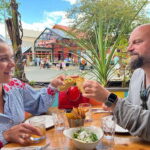
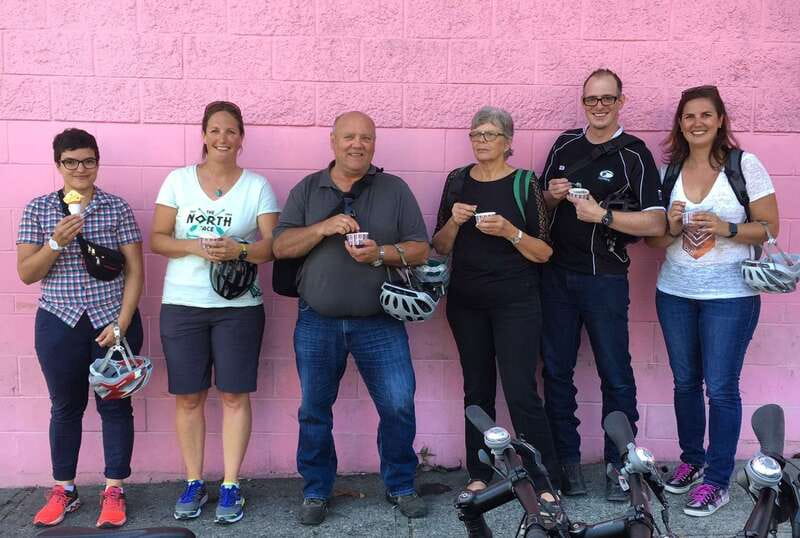
Then you park the bikes and putter through the Granville Island Public Market, with over 100 stalls. This is your real break from pedaling, and it’s the part of the tour where you can take your time. You’ll smell the food, see the crafts, and get the sense that the market is a weekly routine for locals, not just a tourist stage.
Food isn’t included on this tour, so you’ll want to either bring something small with you or plan to buy something in the market. If you’re sensitive to hunger swings, make a quick snack decision early—don’t wait until you’re standing among stalls while your energy drops.
Aquabus Across False Creek: A Simple Water-Taxi Reset
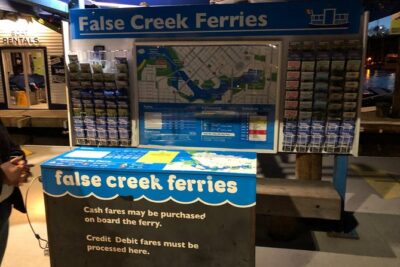
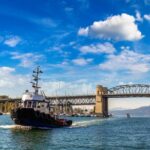
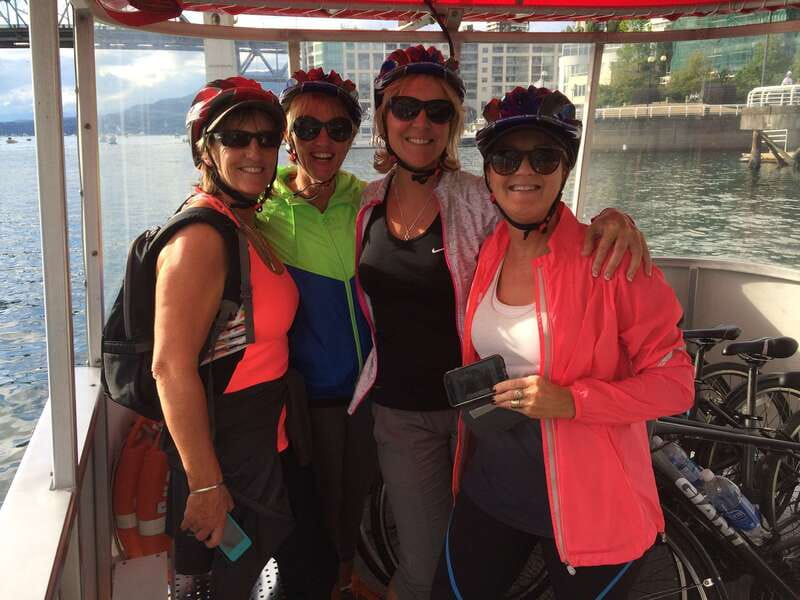
After the market, you hop back on the bikes for a quick crossing using the Aquabus ferry system. It’s a short sea jaunt, but it does something important: it resets your legs and turns the day into a story with a natural break.
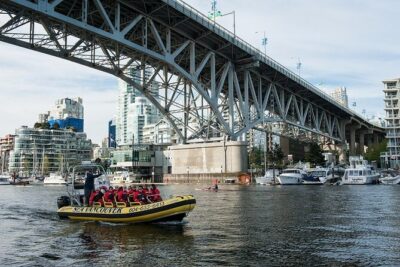
For a first-time visitor, the ferry connection also helps you understand Vancouver’s water routes. You see the city’s edges from a different angle, and you come out feeling like you’ve covered distance without suffering for it.
What the Price Really Covers (and Why It Feels Fair)
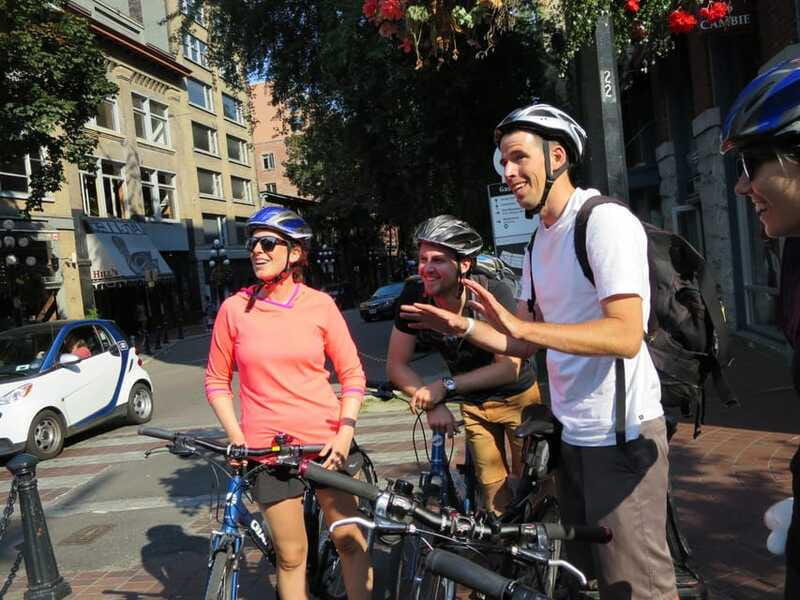
The tour runs about $72 per person for roughly 210 minutes, including bike rental, a helmet, a water bottle, a tour guide, and the Aquabus ticket. For a downtown-focused day with multiple paid admissions/experiences woven in, that package is the main value.
A plain way to think about it: you’re paying for coordination, a guide to connect the dots, and transport you don’t have to plan yourself. If you were doing this on your own, you’d still need a bike rental, figuring out a route, and stitching together the right stops in a logical order. Here, that work is already done for you.
What’s not included is also important. Food isn’t included, and gratuities aren’t included. So if you want market snacks, you’ll budget for them. Also, the ride is flat but still distance-based. If you don’t ride often, this tour can feel like more time than you expect.
Who This Bike Tour Fits Best
This is a great fit if you want a first overview and you like learning while moving. The route covers old and new Vancouver, and it’s paced so you don’t feel rushed at every stop.
It’s also a good match if you appreciate both big sights and small stories. Steamclock machinery and the Giants mural are fun on their own, but the tour’s strength is the way it ties each moment to why it exists—railroad connections at the Roundhouse, cultural context in Chinatown, and local music ties in Strathcona.
It’s not suitable for children under 12 or for people with mobility impairments, based on the nature of the biking. If you’re unsure, consider how comfortable you are with continuous riding and a few walking breaks at stops like the gardens and market.
A Few Tips to Make the Day Easier
- Wear comfortable shoes. You’ll do some walking at stops like the gardens and market.
- Bring sunscreen. The ride is long enough for sun to catch up.
- Plan for no bathroom at the meeting spot. There’s a Starbucks across the street for last-minute needs.
- If you want a snack, get one early. Food isn’t included, and the market will tempt you after you’ve already worked up an appetite.
Should You Book Vancouver: Gastown, Chinatown & Granville Island Bike Tour?
If you want an efficient, rideable way to see Vancouver’s highlights without hopping between taxis, I’d book this. The flat 18 km route keeps it approachable, and the mix of Seawall views, Gastown landmarks, Chinatown gardens, and Granville Island market time gives you variety instead of a single-theme day.
The other reason to book is the guiding style. Jeremy is the type of guide who can make landmarks feel connected, not random. You get stories, quick context, and enough stops to remember the places you see.
If your priority is a long food-focused experience, you might want to pair this with a separate meal plan since food isn’t included. And if you hate bike time, consider that this is truly an all-ride day with short on-foot pauses.
Overall, this is strong value for a first or early visit to Vancouver, especially if you want your day to feel local and logically linked.
FAQ
Where does the tour start?
The tour starts at English Bay Bike Rentals. You should arrive at 1:45PM (13:45) to complete waiver forms and get your bicycle fitted.
What time does the tour begin?
The tour begins at 2:00PM (14:00).
How long is the tour?
The total duration is about 210 minutes, or roughly 3 to 3.5 hours.
How far do you bike?
It’s an 18 km ride on a mostly flat surface (about 11 miles).
What’s included in the price?
Bike rental, helmet, water bottle, a tour guide, and an Aquabus ticket are included.
Is food included?
No. Food is not included.
Is there a bathroom at the meeting point?
There are no bathrooms on site. There is a Starbucks across the street for last-minute bathroom needs.
What should I bring?
Bring comfortable shoes and sunscreen.
Is this tour for kids or everyone with mobility needs?
It’s not suitable for children under 12, and it’s not suitable for people with mobility impairments.
How big is the group?
The tour is a small group limited to 10 participants.