REVIEW · VANCOUVER
Explore the Stars and Universe at Vancouver’s Space Centre
Book on Viator →Operated by HR MacMillan Space Centre · Bookable on Viator
One small stop can still feel cosmic. At Vancouver’s H.R. MacMillan Space Centre, you get 360° planetarium programming plus hands-on exhibits that make space science feel real. The planetarium experience is the star, but the bigger timing issue is that the centre is largely daytime only, so it can be a miss if you’re planning an evening outing.
I particularly like that the ticket is simple: you’re paying for admission and a show, not for a maze of add-ons. I also like the mix of show + interactive areas, so you’re not stuck watching one thing and then leaving. The main drawback to consider is scheduling—when it’s not open, you can’t “make it up” later unless you’re catching the observatory on select nights.
Plan for 60–120 minutes and you’ll get a satisfying mini-journey without rushing. If you want a longer day of sights, this is probably better as a focused stop rather than your whole itinerary.
In This Review
- Key things to know before you go
- HR MacMillan Space Centre: the quick pitch
- Your ticket value: why $20.52 can make sense
- 360° planetarium dome shows: the main event
- Interactive exhibits and the Cosmic Backyard
- Live science demonstrations: good when you catch the schedule
- Price and logistics: the biggest planning lever is time
- Who this is best for (and who should rethink it)
- When to schedule it in your Vancouver day
- Should you book this Space Centre experience?
- FAQ
- What is included with the experience ticket?
- How long does the experience take?
- What are the opening hours?
- Can I attend in the evening?
- Do I need a printed ticket?
- Are service animals allowed?
- What’s the cancellation policy?
Key things to know before you go
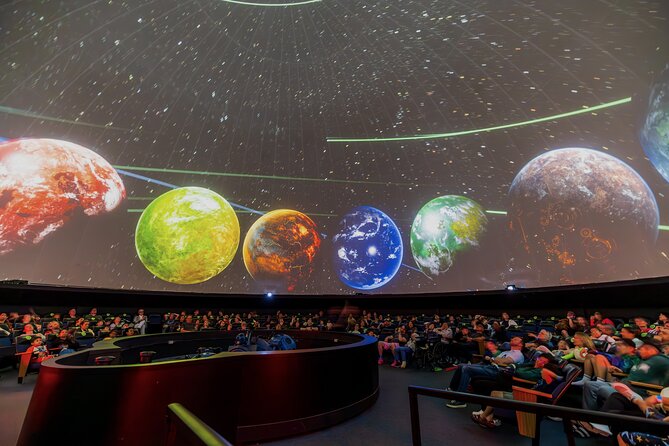
- A 360° planetarium show is included with admission, so your ticket immediately pays off
- Interactive space science exhibits give you something to do between the show and demos
- Live science demonstrations are included, but the timing can vary
- The Cosmic Backyard area adds an extra hands-on feel beyond the main galleries
- Mobile ticket entry makes it easy at the gate
- Hours are mostly daytime, so plan around opening times, not your ship or hotel schedule
HR MacMillan Space Centre: the quick pitch
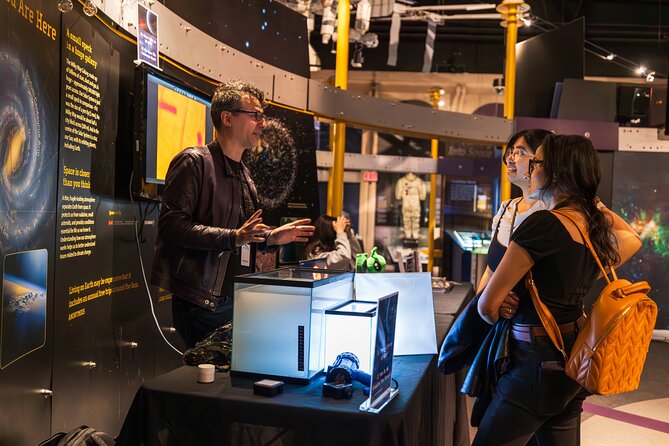
If you’re looking for a space stop that doesn’t require deep space knowledge or a full day, this is a strong match. The H.R. MacMillan Space Centre is built for curious minds, with a planetarium dome at the center and lots of interactive space science nearby.
What makes it especially workable is the time commitment. Expect about 1 to 2 hours to see the key parts. That’s ideal when you’re adding one indoor attraction on a day with weather, when you want a family-friendly option, or when you’re trying to balance a day of Vancouver sightseeing with something educational.
The vibe is science-forward, not lecture-only. Even if you’re not a “space person,” you can still follow along because the experience is designed around watching, doing, and asking questions—especially around the planetarium and hands-on stations.
One thing to keep in mind: the show and the live demos run based on a schedule that can change. So your plan should be flexible once you arrive, not locked to one exact time.
You can also read our reviews of more tours and experiences in Vancouver.



Your ticket value: why $20.52 can make sense
At $20.52 per person, the best way to judge value is what you actually get for that price. Your admission includes entry to the H.R. MacMillan Space Centre, access to interactive exhibits, and one 360° planetarium show per visit. On top of that, you’re also covered for live science demonstrations (with the reminder that the schedule may vary).
That combination matters because you’re not paying just for a single video or a static museum. You’re buying time in a space-focused facility with multiple formats: a show, hands-on learning, and live programming when it’s running.
Also, you’re paying for something that’s hard to “self-recreate” on your own during a short stay. You can read about astronomy anywhere. It’s much harder to get a true 360° dome experience plus guided programming at the same stop without paying admission.
It’s also worth noting the booking lead time. This experience tends to be booked about 26 days in advance on average. That’s not a reason to panic, but it’s a hint that popular times can move faster than you expect—especially on weekends or busier travel periods.
360° planetarium dome shows: the main event
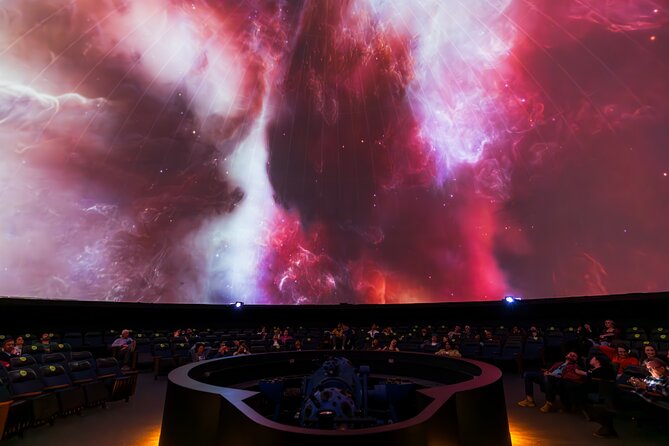
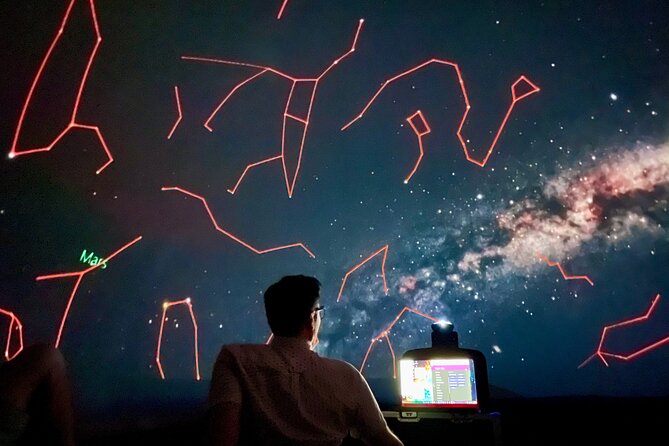
For me, the planetarium dome is the reason to choose this stop. The dome format gives you a feeling of being inside the sky, not just watching a screen. The experience is described as immersive space storytelling through 360° planetarium dome shows, covering topics that range from big-picture mysteries like black holes to more familiar milestones like moon landings.
You can think of this show as your “anchor.” Once you’ve seen it, the exhibits around you make more sense. You’ll likely connect the dots between what the show explains and what you can experiment with afterward.
A practical note: because the show is included (and only one show per visit is stated as included), don’t treat this as a grab-any-time kind of ticket. If you arrive and catch the show right away, you often get the smoothest flow—watch first, then explore the exhibits while the concepts are fresh.
If you’re traveling with kids, the dome is usually the part that holds attention best. If you’re traveling solo, it still helps to have a structured introduction before you start testing interactive stations.
Interactive exhibits and the Cosmic Backyard
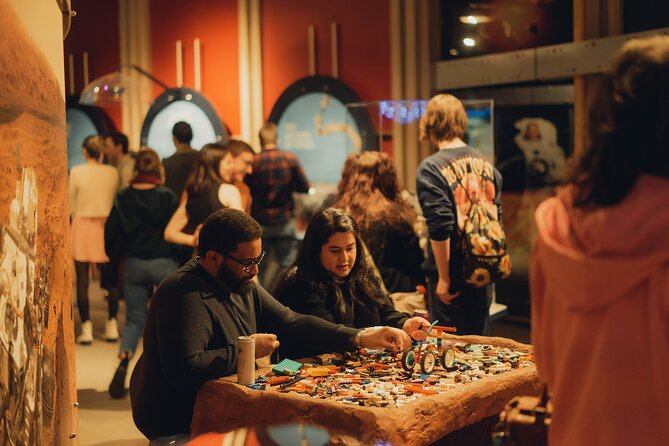
The best part of a space museum is often the hands-on section. Here, you get entry to interactive space science exhibits, which is exactly what you want if you prefer learning by doing over learning by reading.
Interactive areas tend to work for mixed groups because different people can engage with different stations at their own pace. One person might be more into the physical mechanics angle. Another might get curious about astronomical scale and distance.
There’s also an area known as the Cosmic Backyard, which adds variety. In practice, this helps the visit feel less like walking through rooms and more like moving through a playful learning zone. Even if you don’t spend forever in every station, it gives you a second “zone” to reset your brain after the dome.
One caution: interactive exhibits can sometimes be busy. If you show up right around a show start, you might find a few stations temporarily crowded. The fix is simple—after your dome session, spread out through the galleries rather than trying to do everything at once.
Live science demonstrations: good when you catch the schedule
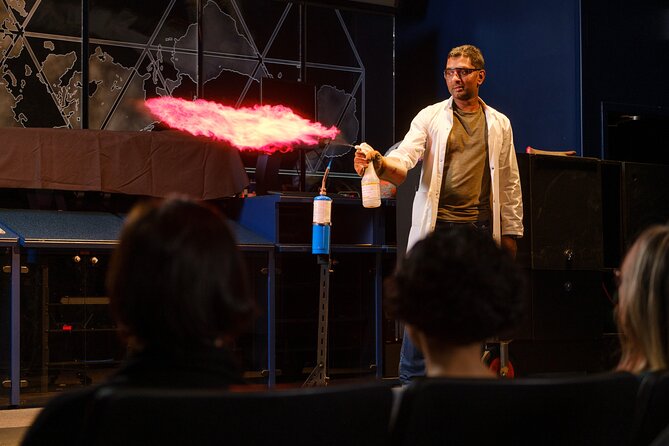
Your ticket includes live science demonstrations, but the key detail is that the schedule may vary. That means you shouldn’t count on being able to plan your entire visit around one specific demonstration time, unless you confirm what’s running on the day.
Still, this is a big value-add. Live demos are different from exhibits because they turn learning into something you can watch and react to in real time. They often help you understand concepts that otherwise feel abstract—like why certain phenomena happen, how scientists test ideas, or what changes when you tweak variables.
My advice is straightforward: once you arrive, check what’s available and build your flow around it. If a demo is near your planned time, grab it. If not, treat it as a bonus rather than the foundation.
If you’re trying to keep the visit to the short end of the 1–2 hour window, plan your order:
- dome show first (so you get the big context)
- then interactive exhibits and an eye on demonstration times
- leave enough buffer so you’re not racing the clock



Price and logistics: the biggest planning lever is time
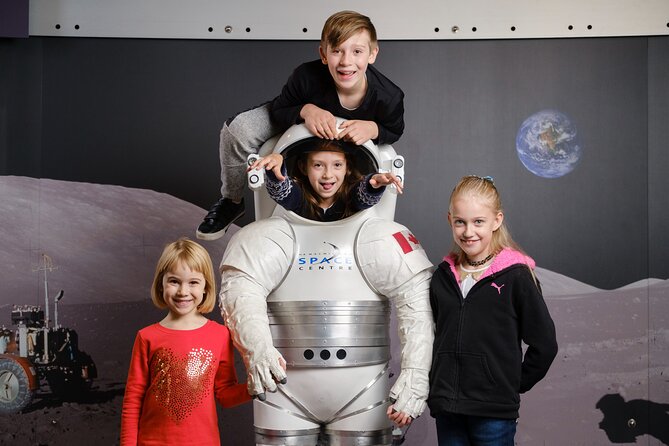
The biggest practical lever here is simple: opening hours. The hours are listed with date ranges, so you need to match your travel day to the correct schedule.
From 06/19/2025 to 12/31/2025, it’s listed as:
- Monday to Friday: 10:00 AM to 3:00 PM
From 01/01/2026 to 01/12/2027, it’s listed as:
- Monday to Sunday: 10:00 AM to 5:00 PM
That schedule can catch people off guard if they’re planning an evening stop. There’s also an important note from the centre’s response style in cases like this: the Space Centre itself isn’t presented as an evening attraction at the times shown, with evenings mainly referencing an Observatory on select nights. So if you’re hoping for a late visit, you’ll want to double-check what’s running and where.
If you’re coming from a cruise port or a hotel far away, treat this as an attraction that needs a firm arrival plan. One hour can disappear fast when transit times stretch.
The good news: the centre is described as near public transportation, and most travelers can participate, so it’s not a complicated logistical puzzle. Just align your expectations with daytime hours and you’ll feel fine.
Who this is best for (and who should rethink it)
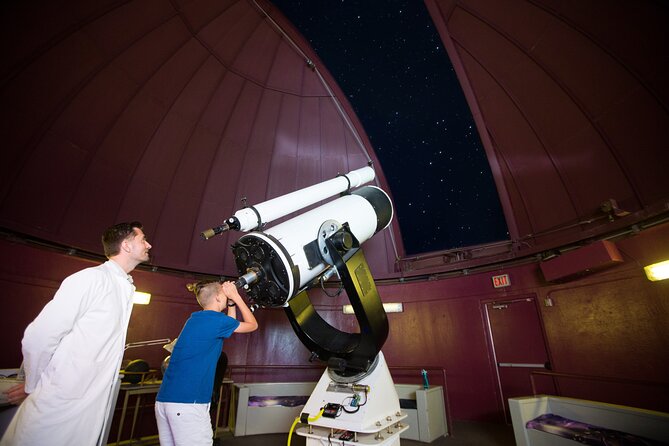
This is a great fit if you want a science stop that’s:
- short and structured (about 1–2 hours)
- family-friendly with a strong show component
- built around multiple learning styles (watching + doing)
- easy to fit into a Vancouver day
It can also work well for couples who like educational attractions but don’t want to spend half a day in a museum-style maze. The dome show helps keep the experience focused, and the interactive exhibits add variety.
Who might rethink it?
- If you’re expecting a full-day, multi-building attraction, this may feel like a one-and-done visit. The experience is designed as a solid stop, not an all-day commitment.
- If your schedule depends on evenings, you may be disappointed unless you’re catching an Observatory night that’s running separately.
- If you’re very detail-oriented and want lots of deep technical content for hours on end, you might find it best as one stop in a broader day of exploration.
Based on the emphasis people place on the dome and the general feel of a quick “good time” outing, I’d call this a reliable planetarium-and-exhibits choice rather than a rare, must-see once-in-a-lifetime museum.
When to schedule it in your Vancouver day
Because the hours are set and it’s easy to spend your time efficiently, I’d plan it as one of your earlier activities. If you’re aiming to see the dome show and then get time in the exhibits, you’ll want breathing room.
A practical strategy:
- Choose a time slot that lands you in the building with at least an hour to spare before the end of opening hours.
- If you can, visit on a day that matches the longer 10:00 AM to 5:00 PM schedule (when available), so you have more room to shift if a demo timing changes.
If you’re traveling with a group that has mixed interests—some want photos, some want learning, some want hands-on breaks—this place handles that mix well. The dome is the shared anchor, and the exhibits offer individual choice.
And because your ticket is a mobile ticket, you won’t be scrambling for paper when you get there. That’s one less friction point on a travel day.
Should you book this Space Centre experience?
Yes—if your goal is a straightforward space science stop with a high-impact planetarium show and enough interactive content to make it feel more than “watch and walk away.” At $20.52, the included dome and exhibits give you a clear sense of value.
I’d book it if:
- you’re traveling with kids or teens who like science in a visual format
- you want an easy indoor activity that still feels special
- you can plan around daytime opening hours
- you’d appreciate a short, focused outing of about 1–2 hours
I’d skip or wait to confirm your timing if:
- you need an evening plan (the schedule is mostly daytime, with evenings mainly tied to select observatory nights)
- your travel times are tight and you can’t absorb a schedule mismatch
- you’re seeking an all-day attraction with lots of separate timed experiences
FAQ
What is included with the experience ticket?
Your ticket includes admission to the H.R. MacMillan Space Centre, access to 360° planetarium shows (one show included per visit), entry to interactive space science exhibits, and live science demonstrations (schedule may vary).
How long does the experience take?
Plan for about 1 to 2 hours.
What are the opening hours?
The hours are listed by date range. From 06/19/2025 to 12/31/2025, it’s Monday to Friday from 10:00 AM to 3:00 PM. From 01/01/2026 to 01/12/2027, it’s Monday to Sunday from 10:00 AM to 5:00 PM.
Can I attend in the evening?
The information provided points to the centre being open during listed daytime hours. There’s also mention that evenings are not generally available except for the Observatory on select nights, so you’ll want to check your date carefully.
Do I need a printed ticket?
No. The experience uses a mobile ticket.
Are service animals allowed?
Yes, service animals are allowed.
What’s the cancellation policy?
You can cancel for a full refund up to 24 hours in advance of the experience start time. Within 24 hours, the amount paid is not refunded.