REVIEW · VANCOUVER
Vancouver: Open-air Whale Watching Tour, Granville Island
Book on GetYourGuide →Operated by Wild whales eco tours · Bookable on GetYourGuide
A trip out of Granville Island turns Vancouver’s waterfront into a real ocean quest, thanks to the Eagle Eyes open-air setup. I love how you get an unrestricted 360° view while the boat moves across the Salish Sea, and I also like the way the marine naturalist helps you spot and identify whales in practical terms, like when Julia explains humpback behavior. You’ll still want a warm layer ready, because weather can turn fast on the water.
One thing to factor in: this tour runs about 3–5 hours depending on conditions, and the ship is not for everyone—it’s not recommended for pregnant people and it’s not suitable for wheelchair users.
In This Review
- Key highlights you’ll feel on the water
- From Granville Island to the Salish Sea: where the day starts
- Safety briefing first: why the rules help you see more
- Eagle Eyes open-air catamaran: the big difference from typical whale tours
- What you can realistically spot in the Salish Sea
- The naturalist angle: learning that actually helps you spot whales
- The itinerary flow: safety, sail, then wildlife viewing
- Timing and weather: dress for wind, not just sunshine
- Onboard comfort: washrooms, seating, and deck freedom
- Price and value: what $165 buys you
- Getting there and parking tips that save your time
- Rules that shape the experience (and what you should plan around)
- Who should book this, and who might not fit it
- Practical checklist before you go
- Final call: should you book this Granville Island whale watch?
- FAQ
- How long is the whale watching tour?
- Where is the meeting point?
- Are washrooms available onboard?
- Is food or snacks included?
- What should I wear or bring?
- Can I bring a drone or pets?
- Are touching marine life and other close-contact behaviors permitted?
- Is the tour suitable for kids?
- Is the tour wheelchair accessible?
- What animals might I see?
- Is the cancellation policy flexible?
Key highlights you’ll feel on the water
- Open-air Eagle Eyes catamaran gives you 360° sightlines with no enclosed cabins getting in the way
- Marine naturalist coaching helps you identify species and understand behavior while you watch
- A stable twin-hull ride can feel smoother than smaller zodiac-style boats
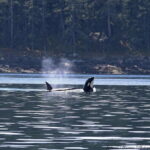
- Wildlife viewing in the Salish Sea puts orcas, humpbacks, dolphins, and seals in your search area
- Whale sightings guarantee adds real confidence to a whale-watching day
- Walk the deck during cruising so you can track movement and get your best photo angle
From Granville Island to the Salish Sea: where the day starts
Your whale-watching morning begins at the Wild Whales Vancouver office on Granville Island, at 1806 Mast Tower Ln. The location is handy because you can reach it by car, public transport, and even the small local ferry service.
Plan to arrive early—there’s a 45-minute safety briefing before you head out. That matters more than you might think on a boat day. You’ll get your bearings fast (and feel less rushed when you’re balancing warm clothes, cameras, and a spot for viewing).
Granville Island itself can get busy, especially in summer. If you drive, there’s paid public parking around the island, but you’ll want extra time to find it.
You can also read our reviews of more whale watching tours in Vancouver

Safety briefing first: why the rules help you see more
That first chunk of time on land can feel like a wait, but it sets up a smoother cruise. The tour’s rules are straightforward, and they exist for two reasons: keeping you safe on an open deck and protecting wildlife.
You won’t have to worry about complicated instructions. You’ll get the basic safety layout, then you’re free to focus on what you came for—watching whales and learning how to read what the animals are doing.
Onboard, you’ll also see clear expectations around respectful viewing. Touching marine life is not allowed, and that’s a good thing. It keeps the animals wild and keeps the experience better for everyone.
Eagle Eyes open-air catamaran: the big difference from typical whale tours
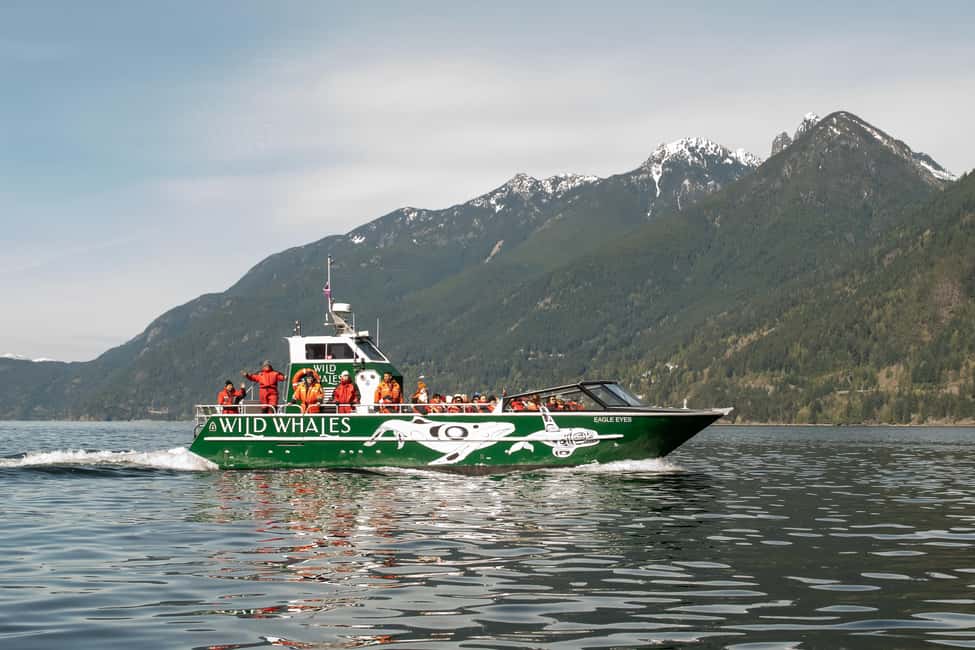
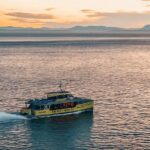
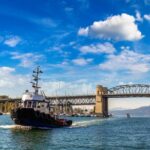
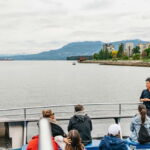
The star of this tour is the Eagle Eyes catamaran—custom-built for comfort, visibility, and that feeling of being right in the middle of the action. The key feature is open-air design with a 360° unobstructed view.
On many whale tours, you’re stuck behind glass or limited to one side of the boat. Here, you can walk around the deck and keep switching viewpoints as whales surface or move. That freedom is excellent for photography because you’re not forced into a single “front-row” position that fills up fast.
The vessel is also a mid-size catamaran, which can help you escape the tight, crowded feeling you sometimes get on larger boats elsewhere. It’s not a small skiff where you’re pressed into one spot. And it’s not a massive floating stadium either.
The twin-hull design is another practical win. It’s built to feel smooth and stable, so you’re more likely to stay comfortable during the cruise even if the water gets a bit active.
What you can realistically spot in the Salish Sea
The Salish Sea is one of the best places on the planet to watch marine life because the ecosystem supports a mix of predators and prey. This tour doesn’t promise a single species, but it does set you up for a strong chance at frequent sightings.
As you head out, keep watch for:
- Orca (killer whales)
- Humpback whales
- Grey whales (if conditions and location align)
- Pacific white-sided dolphins
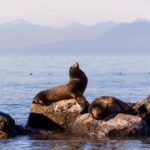
- Steller sea lions
- Harbor seals
- Seabirds floating and diving along the route
What I like about this approach is that it turns whale watching into more than a one-species hunt. Even when the main sightings are quieter, you’re still likely to see seals and sea birds, and the naturalist can connect those moments to the bigger food web.
In one recent experience, guests reported seeing multiple humpbacks and orcas (including an orca identified as Orca Stanley). That’s a good reminder of how these waters can deliver top-tier moments, especially when the captain and naturalist are actively searching.
The naturalist angle: learning that actually helps you spot whales
The tour is led by an experienced captain and a professional marine naturalist, with guided commentary throughout the trip. This is where your day can go from simply scenic to truly educational.
You’ll learn how to identify different whale species and how to interpret their behavior. That includes what you’re seeing when a whale surfaces, how movements can differ by species, and why the timing of blow patterns matters.
One name that stood out in recent feedback is Julia. People specifically praised her for being excellent and super knowledgeable, especially when it came to humpback whale behavior and how to tell them apart while tracking them. You can expect that kind of practical guidance—so you’re not just spotting shapes in the distance.
Even if you don’t catch every hoped-for animal, you’re still likely to get useful context. For example, sea otters come up as part of the wider marine wildlife picture, even when they aren’t spotted on a particular outing.





The itinerary flow: safety, sail, then wildlife viewing
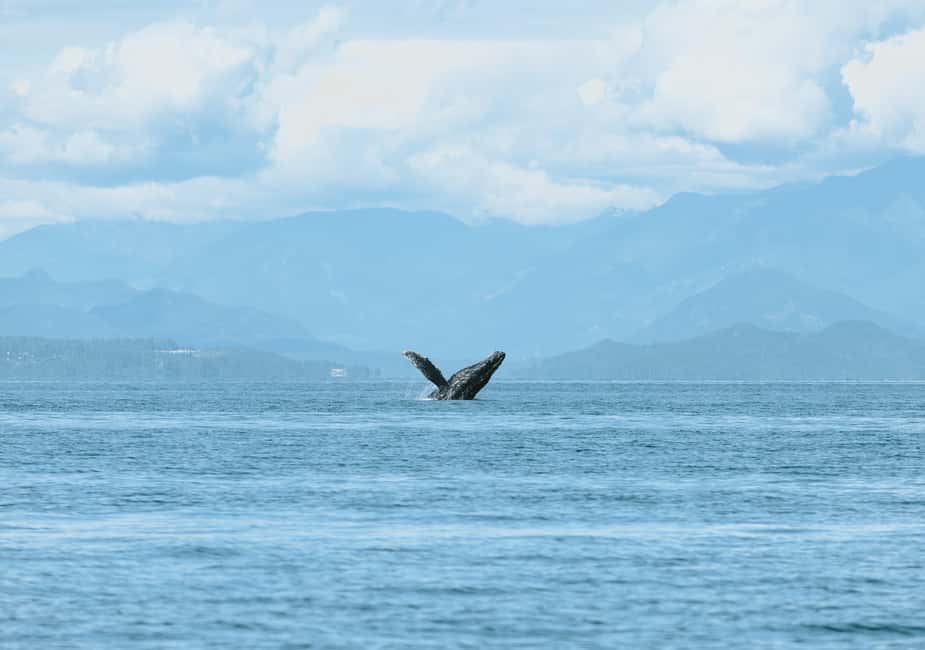
This trip is built around a simple rhythm, and that’s a good thing. It keeps your attention where it should be.
You start with the Granville Island safety briefing, then you’re out on the water for guided wildlife viewing across the Salish Sea. The time on the water is where the magic happens—about 3–5 hours depending on weather, location of whales, and conditions that affect where the captain can go.
That flexibility is worth understanding. Whale watching is dynamic. If the whales are farther out, the captain may need to adjust the route to get you in the right search area. If weather is choppy, you may spend more time where conditions are safer. Either way, you’re riding with a crew that’s making real-time calls.
When the tour ends, you return to Wild Whales Vancouver on Granville Island. The timing is built around the same on-water search priorities rather than a rigid schedule that ignores wildlife reality.
Timing and weather: dress for wind, not just sunshine
This is an open-air experience. That sounds exciting—and it is—but it also means you should dress like the ocean could add wind at any moment.
Bring warm clothing and a hat. Pack a camera if you want photos, and plan for gloves or an extra layer if you run cold. You can also bring your own warmth gear, but the tour lists optional wind breaker or suit for warmth, which is exactly what you want in a sea-breeze environment.
You should also bring food and drinks. Snacks aren’t included, and it’s better to avoid decision-making on the dock when you’d rather be watching the water. A reusable water bottle is a smart add for a long day.
If you have your own comfort priorities, think about deck time. You’ll likely spend a lot of it standing or moving so you can find the best view.
Onboard comfort: washrooms, seating, and deck freedom
Eagle Eyes balances “be outside” with basic comforts. There are onboard washrooms, and you’ll find individual seating available.
That said, the tour encourages you to move around the deck. The best wildlife sightings can happen in different directions, and the open-air setup only works if you take advantage of it. If you want photos, this is especially helpful. You can position yourself where the whale’s likely to surface next, then adjust again when it moves.
If you prefer a lot of sitting, you might not fully enjoy how the day is designed. But if you like the idea of tracking wildlife actively—rather than watching from one fixed spot—you’ll likely love this format.
Price and value: what $165 buys you
At $165 per person for a tour around 5 hours total, this isn’t the cheapest whale option. The value comes from three places.
First, you’re paying for the combination of open-air 360° viewing plus a stable catamaran ride. That’s a meaningful quality-of-experience factor for serious whale watching and for photography.
Second, you get a captain plus a professional marine naturalist. Whale watching is partly luck, but it’s also search strategy and species interpretation. That guidance helps you see more than just the moment you spot a spout.
Third, there’s a whale sightings guarantee included. The details of how that guarantee plays out aren’t spelled out here, but the existence of the guarantee signals that the operator expects to deliver real sightings on a normal outing.
So, if you care about learning while you watch and you want unobstructed deck time, this price makes more sense. If you mainly want a quick scenic cruise, you might feel the cost more than the experience.
Getting there and parking tips that save your time
Meeting at Granville Island is a big plus because it’s close to downtown Vancouver and easy to reach by multiple transit options. For driving, parking is available across Granville Island and is paid.
Arrive early. In summer, the island gets busy fast, and the last thing you want is to show up late for a tour that starts with a 45-minute safety briefing.
If you’re traveling with a group, leave enough buffer time so everyone finds the office and you’re not scrambling with coats and cameras right before boarding.
Rules that shape the experience (and what you should plan around)
A whale tour is a shared space with real limits, and this one is clear about them.
Not allowed:
- Pets
- Drones
- Non-folding strollers
- Alcohol and drugs
- Touching marine life
That’s great for keeping the wildlife safe and keeping sightlines clear. If you plan to bring a camera gear setup, be mindful of deck space and how people move—open deck tours work best when everyone can see.
Who should book this, and who might not fit it
This tour is a strong match if you:
- Want a high-visibility, open-air whale-watching experience
- Care about learning species ID and behavior from a marine naturalist
- Prefer a stable ride rather than a small, bouncy vessel
- Like the idea of moving around the deck for the best sight lines
It may not be a great fit if:
- You’re pregnant (not recommended)
- You need wheelchair access (it’s not suitable for wheelchair users)
- You’re traveling with a young child under 3 (not recommended under 3 years)
- You plan to bring a pet or a drone (both are not allowed)
If you’re unsure, think about your comfort with wind, deck standing, and moving during the cruise. This tour is designed for people who want to be active observers, not just seated spectators.
Practical checklist before you go
You’ll be happiest if you show up ready to stay warm and hydrated without scrambling.
Bring:
- Warm clothing and a hat
- Camera
- Food and drinks
- Reusable water bottle
Optional:
- Wind breaker or a suit for warmth
Leave at home:
- Pets and drones
- Anything that doesn’t follow the stroller rule (non-folding strollers aren’t allowed)
- Alcohol and drugs
Also remember the timing: arrive 45 minutes prior to departure so you’re not stressed about the safety briefing.
Final call: should you book this Granville Island whale watch?
I’d book this tour if your dream day is real whale watching with a naturalist guiding your observations and you want the freedom of an open-air 360° deck. The value lands hardest when you care about learning species behavior, not just getting a distant sighting.
I’d hesitate if you’re sensitive to weather, need mobility accommodations, or are traveling with a very young child under 3. The best whale trips happen when you can stay comfortable for the full time, and this one is all about deck-time viewing.
If you want a Vancouver whale watching experience that feels connected to the water and not boxed-in by barriers, Eagle Eyes from Granville Island is a smart pick.
FAQ
How long is the whale watching tour?
The tour duration is listed as 3–5 hours on the water, with a total experience time of about 5 hours.
Where is the meeting point?
Meet at the Wild Whales Vancouver office at 1806 Mast Tower Ln, Vancouver, BC V6H 4B6 on Granville Island.
Are washrooms available onboard?
Yes, washrooms are available onboard.
Is food or snacks included?
No. Food and snacks are not included, so plan to bring your own.
What should I wear or bring?
Bring warm clothing, a hat, and a camera. It also helps to bring food and drinks and a reusable water bottle. The tour offers optional wind breaker or suit for warmth.
Can I bring a drone or pets?
No. Drones and pets are not allowed.
Are touching marine life and other close-contact behaviors permitted?
No. Touching marine life is not allowed.
Is the tour suitable for kids?
Children under 3 years are not recommended on this vessel.
Is the tour wheelchair accessible?
No. This tour is not suitable for wheelchair users.
What animals might I see?
You may see orcas, humpback whales, grey whales, Pacific white-sided dolphins, Steller sea lions, harbor seals, and various seabirds.
Is the cancellation policy flexible?
Yes. There is free cancellation up to 24 hours in advance for a full refund.