REVIEW · VANCOUVER
Vancouver Science World Ticket
Book on Viator →Operated by Science World · Bookable on Viator
Science World turns questions into play. For about 2 to 3 hours, this Vancouver science center blends hands-on galleries with hourly Live Science demos, and your ticket is a mobile scan at the door. You’re not just looking at explanations; you’re trying things, pushing buttons, and watching science happen.
One caution: it is mainly kid-focused, so older kids and adults may only feel fully satisfied if they pick the right areas. The upside is that the ticket covers general admission to a lot of interactive spaces, so you can stay flexible if one gallery is not your thing.
In This Review
- Key Highlights Before You Go
- Science World at a Glance: What Your Ticket Buys
- Price and Logistics: Mobile Ticket, Entry Lines, and Timing
- Permanent Galleries That Keep Kids Busy (and Adults Interested)
- BodyWorks Gallery: how your body really works
- Creative Technology Gallery: video game making, hands-on digital play
- Eureka! and the play learning style
- Centre Stage Live Science: The Hourly Show That Sets the Pace
- Feature Gallery and Seasonal Areas: What Might Be Open
- Feature Gallery: Earth Matters (listed through Jan 9, 2025)
- Ken Spencer Science Park: seasonal closure Oct to Mar
- Wonder Gallery (Under 5): Built for Tiny Explorers
- Beyond the Big Ones: Puzzles, Illusions, Tinkering, and Nature
- Puzzles and Illusions: fun, challenging brain work
- Tinkering Space: The WorkSafeBC Gallery
- Search: Sara Stern Gallery
- OMNIMAX Theatre Closed for Renovation: Adjust Your Expectations
- Crowds, Exhibit Maintenance, and How to Get a Smooth Day
- Food, Energy, and Staying Comfortable for a 2–3 Hour Visit
- Who This Ticket Fits Best (And Who Might Want Something Different)
- Should You Book This Vancouver Science World Ticket?
- FAQ
- How long does the Vancouver Science World ticket take?
- What is the price per person?
- What’s included with the ticket?
- Is the OMNIMAX Theatre available?
- Does Science World have live science demonstrations?
- Is this ticket delivered as a mobile pass?
- Are there seasonal closures for parts of the museum?
- Is Science World easy to reach by public transportation?
- Can I cancel for a full refund?
Key Highlights Before You Go

- Mobile ticket entry: scan from your phone at arrival, so you can skip extra paperwork.
- BodyWorks + Creative Technology + Eureka!: a strong mix of body science, digital making, and play-based learning.
- Centre Stage happens hourly: plan your route around the live demo rhythm.
- Wonder Gallery for under-5 kids: crawling spaces, water play, mess pit, and rope climbing are built for little ones.
- Plan around closures and seasonality: OMNIMAX is closed for renovation, and some parks close seasonally.
Science World at a Glance: What Your Ticket Buys

Science World is a general admission ticket to one of Canada’s most family-friendly science spaces. Expect an average visit time around 2 to 3 hours, but you can easily stretch it if your group lingers in hands-on zones or returns for a live show.
The price is $26.70 per person, and you should budget for the added 5% GST (about CAD $1.79 per person). That puts your all-in cost close to CAD $28.49 per person, which feels fair if you’ll actually use the variety of interactive galleries instead of doing a quick lap.
It’s also easy to fit into a day: it’s near public transportation, and the ticket is delivered as a mobile pass. If your crew likes short, high-energy activities, this is the kind of place that keeps momentum.
You can also read our reviews of more tours and experiences in Vancouver



Price and Logistics: Mobile Ticket, Entry Lines, and Timing
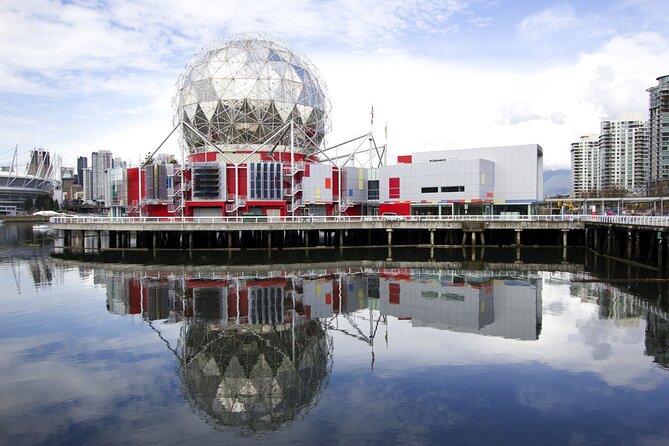
Your biggest logistics win here is the mobile ticket. You’ll receive confirmation at booking time, and at entry your pass is scanned from your phone. That’s usually faster than juggling printouts, and it helps when you’re managing kids who are already losing patience.
Do keep one practical note in mind: there can be a line at the ticket area. If you arrive late or your phone isn’t ready, you may end up waiting even though you have a ticket. I’d treat this like any popular indoor attraction and arrive a bit earlier than your group thinks is necessary.
On timing, the site closes earlier than a lot of people expect. One review specifically mentioned a 5 pm closing, so plan your visit earlier in the afternoon if you want time to see more than a handful of galleries.
Permanent Galleries That Keep Kids Busy (and Adults Interested)

Science World’s permanent galleries are built around interaction, not just reading. That means you can steer your visit based on age and interest, instead of forcing everyone through the same sequence.
BodyWorks Gallery: how your body really works
BodyWorks is where you get the human body theme without turning it into a textbook. It’s designed for learning through exploration, which is great if your kids like questions like what happens when you… run, breathe, or move.
For older kids, this gallery can still land well because it’s hands-on and visual. The only drawback is that it may not feel like deep lab work for adults—more like science you can test with your own senses.
Creative Technology Gallery: video game making, hands-on digital play
If your child likes screens and creativity, Creative Technology is a strong pick. You’re not just watching digital content; you’re exploring how digital experiences are built.
It also helps that this gallery often feels fresh compared to typical museum exhibits. It’s one of those places where kids can stay engaged without constant adult prompting.






Eureka! and the play learning style
Eureka! is set up as high-energy learning through play. This is a good match for families who want fewer lectures and more do-it-yourself science games.
If your group is mostly school-age kids, Eureka! often becomes a time sink—in a good way.
Centre Stage Live Science: The Hourly Show That Sets the Pace

Centre Stage runs hourly Live Science demonstrations, and that matters because it gives your visit a schedule. Instead of randomly wandering, you can time your route so you catch the demo when your group is most ready to focus.
Live shows tend to work for mixed ages because kids are usually curious even when they claim they are bored. Adults usually enjoy them too when they’re watching experiments rather than reading explanations.
Practical tip: if you’re planning your visit around one highlight, make it Centre Stage. It’s the kind of anchor activity that gives your day structure.
Feature Gallery and Seasonal Areas: What Might Be Open

Some areas depend on dates and seasons, so check the status before you plan a full day.
Feature Gallery: Earth Matters (listed through Jan 9, 2025)
Science World’s Feature Gallery has included Earth Matters, listed as running until Jan 9, 2025. Since that end date is specific, you should treat this as a rotating highlight rather than a permanent guarantee.
The value of the feature slot is simple: it gives you a reason to visit even if you have seen the permanent galleries before.
Ken Spencer Science Park: seasonal closure Oct to Mar
Ken Spencer Science Park is linked to the living world, but it has seasonal closure from October to March. If you’re traveling during those months, you’ll want to focus on indoor galleries instead of counting on outdoor exploration.
If you’re visiting outside that closure window, it can add a different texture to the day because it shifts from indoor exhibits to more nature-connected play and learning.
Wonder Gallery (Under 5): Built for Tiny Explorers

If you have kids under 5, Wonder Gallery is where your time will fly. It includes soft crawling spaces, a water table, a mess pit, and rope climbing designed for very young kids.
This is not a corner exhibit—it’s a major energy zone. It’s also why many families get such a good experience: little kids can burn energy while learning through movement and exploration.
The trade-off is crowd control. One review noted that the center can feel crowded with little kids, which is mostly manageable but something to plan for. If your group is easily overwhelmed by noise or movement, consider choosing slightly off-peak arrival times.
Beyond the Big Ones: Puzzles, Illusions, Tinkering, and Nature

Even if you skip nothing, not every gallery hits at the same time for every group. These supporting areas are worth knowing because they let you tailor the visit.
Puzzles and Illusions: fun, challenging brain work
Puzzles and Illusions is a good reset option when you feel like your group needs a change of pace. It’s also one of those areas where older kids can shine because they may enjoy figuring things out without being forced to watch a show.
Tinkering Space: The WorkSafeBC Gallery
Tinkering Space focuses on experimental construction and problem-solving. For kids, that can translate into confidence: try something, fail, adjust, and try again.
It’s also a solid choice for families who want less chaos than pure play areas. Construction-style activities can give kids a clearer task and keep them occupied longer.
Search: Sara Stern Gallery
Search: Sara Stern Gallery is about nature, from majestic to microscopic. Even without turning it into a lecture, this kind of theme often helps kids connect the idea that science exists at every scale.
If your child likes seeing how small things matter, this gallery is a useful balance to the more action-heavy zones.
OMNIMAX Theatre Closed for Renovation: Adjust Your Expectations

One clear heads-up: the OMNIMAX Theatre is currently closed for renovation. That matters because people often buy tickets hoping for a big movie option.
If your family’s plan includes a theatre segment, you’ll want to replace it with a hands-on gallery block or timed Centre Stage visit. In other words: treat the ticket as a gallery-and-demo experience, not as a guaranteed film day.
This also helps you avoid disappointment. The closure is a different kind of situation than a surprise you can’t control.
Crowds, Exhibit Maintenance, and How to Get a Smooth Day
Science World can get busy, especially with groups of younger kids. That doesn’t ruin the experience, but it affects how comfortable you’ll feel moving between stations.
A few other practical notes from real visits:
- Some exhibits may be temporarily not working and may need maintenance.
- The site feels best when you give yourself enough time to explore instead of rushing through.
So my advice is simple: build in buffer time. If you only have a tight schedule, pick 2 to 3 must-do areas plus Centre Stage, then stop before you feel stressed.
Also, if you’re visiting with someone who uses a wheelchair, you might find there are engaging movement-based activities. One review mentioned wheelchair racing as a highlight.
Food, Energy, and Staying Comfortable for a 2–3 Hour Visit
You’ll likely want a snack break. The food court was described as having a nice assortment, and one review called out that the food was hot. That’s the kind of detail that matters when you’re managing hungry kids and keeping the day positive.
Also, plan on the fact that this is a lively indoor environment. Expect a lot of running, talking, and hands-on mess energy—especially in the Wonder Gallery area. If your family likes quiet museums, this may feel like a different style of science entirely.
Who This Ticket Fits Best (And Who Might Want Something Different)
Science World is easiest to recommend when your group includes kids who want to touch, test, and play. Reviews consistently point toward families getting the most out of it when kids are in the preschool to early school range.
If you have a 14-year-old, you might still find plenty that works, especially the digital and body science areas. One review even said a 14-year-old son found several exhibits interesting. But if your goal is adult-level science depth, you may leave wanting more lab-style discovery.
Couples can have fun here too—especially if you enjoy interactive exhibits and don’t mind the kid-energy. Just set expectations: this place is built around kids first.
Should You Book This Vancouver Science World Ticket?
Book it if you want a low-stress indoor science day that’s heavy on hands-on learning, with a clear show anchor in Centre Stage. With mobile entry, interactive permanent galleries, and kid-first zones like Wonder Gallery, it’s a strong value for families who can spend a real couple hours.
Skip (or rethink) the ticket if you’re mostly chasing an OMNIMAX movie experience, because that theatre is closed for renovation. Also consider your kids’ ages: if your group skews older and expects deeper scientific explanations, you may need to plan which galleries to prioritize.
If you’re flexible and willing to let your route follow what your kids enjoy most, this is one of those attractions that can turn a rainy or busy day into something fun and genuinely educational.
FAQ
How long does the Vancouver Science World ticket take?
Plan for about 2 to 3 hours on average.
What is the price per person?
The price is $26.70 per person, plus 5% GST (about CAD $1.79 per person).
What’s included with the ticket?
General admission is included.
Is the OMNIMAX Theatre available?
No. The OMNIMAX Theatre is currently closed for renovation.
Does Science World have live science demonstrations?
Yes. Centre Stage offers Live Science demonstrations on an hourly schedule.
Is this ticket delivered as a mobile pass?
Yes. The ticket is a mobile ticket.
Are there seasonal closures for parts of the museum?
Yes. Ken Spencer Science Park is seasonally closed from October to March.
Is Science World easy to reach by public transportation?
Yes. It is near public transportation.
Can I cancel for a full refund?
You can cancel for a full refund if you cancel at least 24 hours in advance of the experience start time.