REVIEW · VANCOUVER
Wild Whale Watching Experience – Open Air Vessel
Book on Viator →Operated by Wild Whales Vancouver · Bookable on Viator
The sea can’t hide forever. This Vancouver whale-watching trip pairs an open-air boat, 360° sightlines, and conservation-minded data with real marine naturalist guidance. I especially like that the search is guided by animal behavior and local ecology, not just a generic “look for whales” script. I also love the practical touch of an anti-exposure suit—because time on the water in British Columbia can get chilly fast. One possible drawback: this is weather-dependent and you may spend a lot of time cruising while the team searches, since whale sightings aren’t guaranteed.
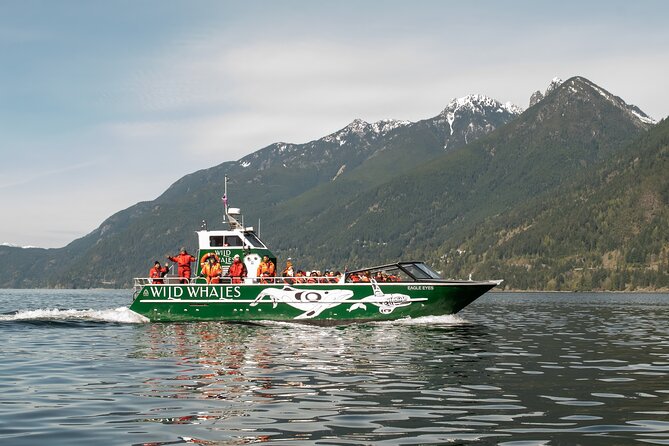
You start from historic Granville Island and head out toward English Bay and the Strait of Georgia. The tour runs about 3–5 hours, and the open-air Eagle Eyes vessel gives you an unrestricted view of what’s happening on all sides. There’s also a marine naturalist on board—plus field guides you can borrow to help you ID what you’re seeing as you go.
In This Review
- Key Highlights You’ll Actually Care About
- Granville Island to the Strait of Georgia: Your First Hour on Eagle Eyes
- The Whale and Wildlife Search: What You Might See (and Why It Changes)
- Marine Naturalist Guidance: Whale IDs You Can Use Right Away
- Eagle Eyes Open-Air Boat: Views, Comfort, and a Real Restroom
- What to Pack (Because the Tour Can Run Long)
- The “Closer Than Other Boats” Factor: How You Get Better Sightings
- Price and Value: Is $169.74 Worth It?
- Weather, Timing, and the Best Day to Go
- Should You Book This Vancouver Whale Watching Tour?
- FAQ
- How long is the Wild Whale Watching Experience?
- Where does the tour start?
- What wildlife are you searching for?
- What’s included with the ticket?
- Do I need to bring snacks?
- Is the vessel open air?
- What if the weather is bad?
Key Highlights You’ll Actually Care About
- Open-air 360° viewing from the Eagle Eyes vessel for spotting fin, spout, and movement faster
- A legal closer approach to wildlife than many other boats can manage
- Anti-exposure flotation suit included to help you stay comfortable on deck
- Marine naturalist guidance with whale behavior and local marine conservation focus
- On-board whale ID materials (borrowable field and identification guides)
- Motion-sickness help on request (ginger candy and ear plugs), plus sunscreen and water
Granville Island to the Strait of Georgia: Your First Hour on Eagle Eyes
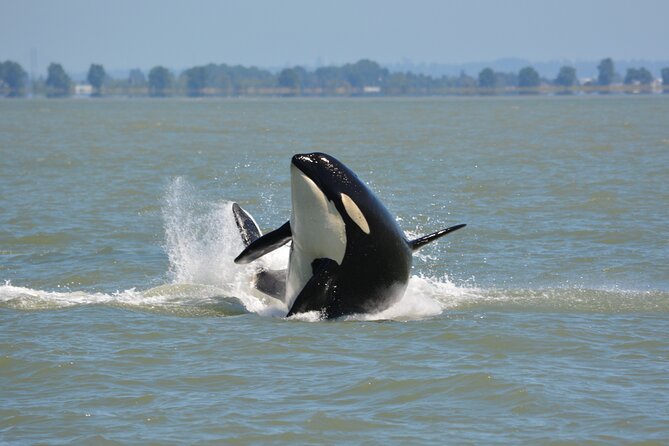
The experience starts at 1806 Mast Tower Ln, close enough to public transportation that you won’t need a full production just to get there. From Granville Island, you get a proper water-level look at Vancouver before you even start scanning for wildlife. That early stretch matters because you’re building a mental map of the coastline, shipping routes, and likely whale travel corridors in the Strait of Georgia.
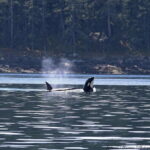
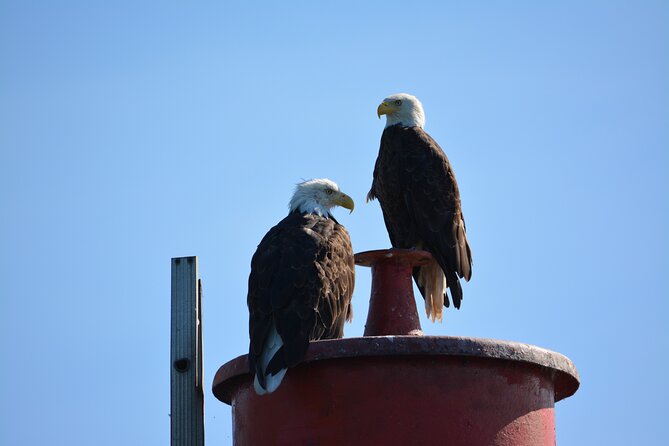
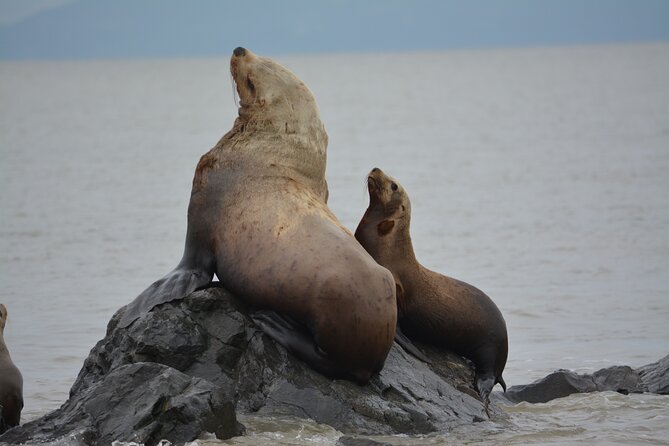
Then the boat turns outward toward English Bay and into the Strait of Georgia. This is where the tour’s rhythm kicks in: cruise, scan, reposition, and repeat. Your guide is looking for orca (killer whales), humpback whales, minke whales, and/or grey whales. At the same time, you’re also watching for a second layer of “bonus wildlife” like sea lions, porpoises, seals, bald eagles, and seabirds.
The open-air design is a big deal here. You’re not stuck looking forward through a window. You’re watching motion everywhere—when a fin slices through the surface, when birds change direction, when spouts show up at an angle that a smaller observation setup might miss. You’ll feel it most when something appears off to the side and you don’t have to turn your whole body to see it.
You can also read our reviews of more whale watching tours in Vancouver

The Whale and Wildlife Search: What You Might See (and Why It Changes)
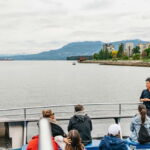
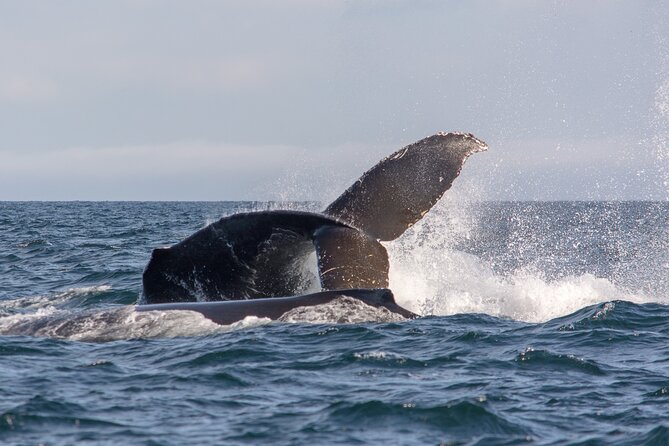
This tour is built around real marine spotting in local waters. The main target list is orca, humpbacks, minke whales, and grey whales. But it doesn’t stop there. You’re also actively scanning for Steller and California sea lions, harbour or Dall’s porpoises, harbour seals, bald eagles, great blue herons, and other seabird activity.
Here’s the practical truth: whales don’t “arrive on schedule.” The boat can legally approach wildlife closer than other vessels can, but that only helps if the animals are in the area and behaving in a way that allows a safe, responsible approach. That’s why your time on the water can stretch toward the upper end of the window when whales are farther out—or when they surface frequently enough that the captain slows, stops, and lets you enjoy what’s happening.
One of the best parts of this setup is variety. Even if you’re a repeat visitor to Vancouver whale watching, this format tends to feel different each time because local wildlife movements shift day to day. Some trips are more “whale focused,” while others lean heavier on seals, porpoises, and seabirds with occasional whale moments.
Marine Naturalist Guidance: Whale IDs You Can Use Right Away
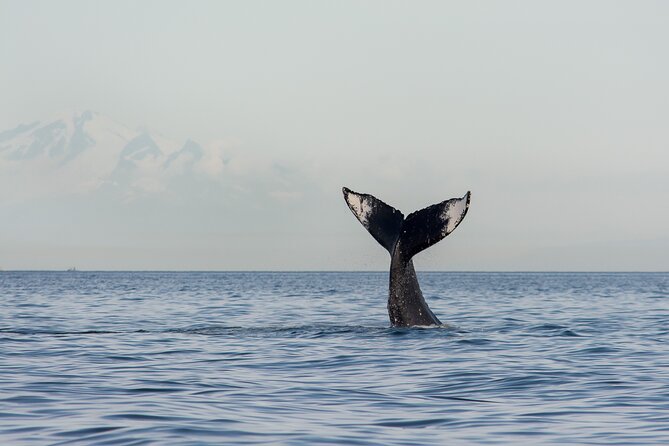
A lot of whale tours give you a quick explanation. This one is guided by a marine naturalist, and it shows. The guidance is built around animal behavior—why certain whales surface when they do, how groups move, and what to watch for while you’re scanning the water. You’re also taught local ecology, history, and geography of the waters you’re cruising through, with an emphasis on marine conservation.
You’ll also have tools that actually help you learn in the moment. Field guides and whale identification guides are available to borrow on board. That matters because “seeing a whale” feels much more satisfying when you can match what you’re looking at to a likely species. It’s also just plain fun to compare notes with the guide as new details pop up: the shape of a dorsal fin, the timing of surfacing, how the blow/spout looks from different angles.
And there’s an extra conservation angle that I appreciate. Data from the Vancouver tours goes to research and conservation initiatives. In other words, this isn’t only about the sighting—it’s also about improving how people understand and protect these animals over time.
Eagle Eyes Open-Air Boat: Views, Comfort, and a Real Restroom
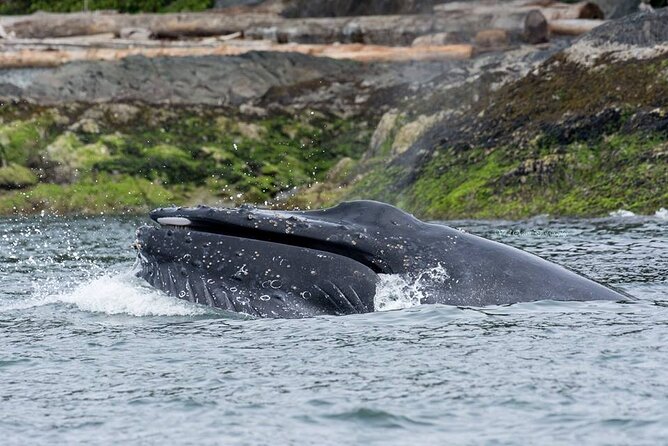
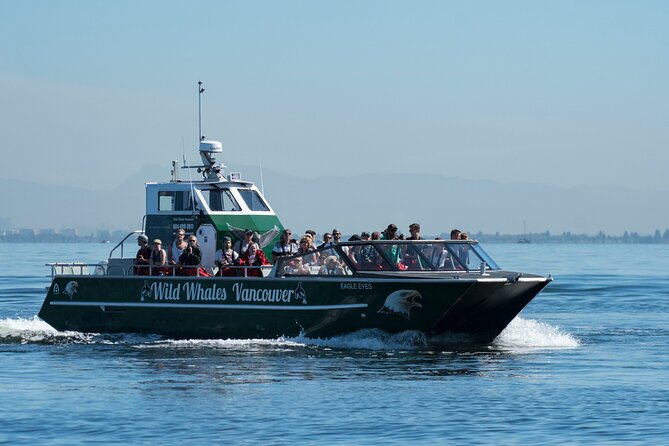
The vessel is called Eagle Eyes, and it’s open air. That translates to something simple: you can see in all directions. If whales surface near your position, you’re not stuck craning around or waiting for the boat to rotate. You’re ready to spot them quickly because your eyes have a full field of view.
Comfort is covered more than you might expect. You’re provided a full-length anti-exposure flotation suit (one piece, with arms and legs). You wear it over your clothing. That’s a key inclusion for Vancouver because wind and sea spray can turn a “nice morning” into “why didn’t I bring warmer gear” faster than you think.
A real practical plus: there’s a restroom on board. That may sound minor, but on a trip that can run up to about five hours depending on where the whales are, it can make the whole outing feel easier.
You’ll also want to remember that this is still a boat ride. The captain’s job is to position the vessel safely and responsively around wildlife, and that can mean changing speed. The tour provides bottled water, and there’s sunscreen included. If you’re prone to motion sickness, you can request ginger candy and ear plugs for extra help.
What to Pack (Because the Tour Can Run Long)
Even with a “3–5 hours approx.” time window, this kind of whale watching often feels longer than you think once you’re out on the water and the team is searching. The tour can last up to five hours depending on whale locations, and the water doesn’t care about your snack plan.
So I strongly recommend bringing your own snacks. Snacks aren’t included, and that’s one of the few gaps you’ll notice. If you go hungry, you’ll spend more energy worrying about comfort than enjoying the spotting.
For what else to bring, focus on staying flexible:
- A refillable water bottle is preferred, even though extra bottled water is carried onboard.
- Warm layers help, even with the anti-exposure suit, because your clothing still matters underneath.
- If you’re sensitive to sound or motion, request ear plugs and ginger candy ahead of time if possible.
Also note a limitation: this tour isn’t recommended for travelers with neck problems. With open-air viewing, you’ll likely shift your posture and look around frequently.



The “Closer Than Other Boats” Factor: How You Get Better Sightings
One of the tour’s most exciting claims is that your vessel can legally approach wildlife closer than other vessels can. That’s not just marketing language. When a whale or a pod is near, closeness affects what you can actually see: the timing between surfacings, the shape of the blow, and the way the animals interact with each other and with their environment.
It also affects your ability to enjoy longer moments. When the captain decides the timing is right, you may get periods where everyone hushes and watches carefully rather than constantly repositioning. That kind of quiet, shared focus is where whale watching becomes memorable.
That said, closeness also depends on animal behavior and safety rules. Some trips will be “watch from a bit farther out,” and some will feel like you’re part of the scene. The key is that the team is actively managing approach legally and responsibly while keeping you in the best viewing zone.
Price and Value: Is $169.74 Worth It?
At $169.74 per person, this isn’t the cheapest whale option in Vancouver. The value comes from what you actually get during the hours on the water: the open-air 360° viewing, the anti-exposure flotation suit inclusion, and the marine naturalist guidance that turns sightings into learning moments.
You’re also paying for a smaller-group feel. The tour caps at a maximum of 35 people, which usually means less crowding than the biggest coach-and-giant-boat setups. That matters on a sighting-focused trip because you want space to move your gaze without constant obstruction.
Then there’s the conservation angle: tour data supports research and conservation initiatives. That doesn’t replace a great day on the water, but it does add meaning to the experience.
If you’re the type of person who wants more than a quick pass-by and you’re willing to spend the time needed to find whales, this price can feel fair. If you’re hoping for a short, guaranteed, “whales in the first 20 minutes” outing, you might find the search element frustrating—because whale watching is always a bit of waiting.
Weather, Timing, and the Best Day to Go
This experience requires good weather. If weather turns, it may be canceled and you’ll be offered another date or a full refund. That’s a big deal because the boat is open air, and comfort depends on conditions.
Timing also matters emotionally. On the water, you might see lots of action—or you might work through quiet stretches while the captain searches. The upside is that this tour’s approach uses the time well: you’re scanning for multiple species, learning as you go, and getting help with comfort so you can stay focused when whales finally appear.
A helpful detail: confirmation is provided within 48 hours of booking, subject to availability. If you’re flexible, you can use that window to choose a day that lines up with better weather.
Should You Book This Vancouver Whale Watching Tour?
Book it if you want the best chance at meaningful whale encounters with a setup that supports spotting: open-air 360° views, included anti-exposure suit, and a marine naturalist who teaches while you search. I’d also choose it if you care about marine conservation and like the idea that tour data supports research.
Skip it (or pick something else) if you want a guaranteed quick sighting, or if you have neck problems. And if you tend to get cold or motion sick, plan ahead by using the on-request ginger candy and ear plugs and bringing snacks.
If your goal is to come away knowing what you saw and feeling like the day mattered, this is one of the stronger ways to do Vancouver whale watching from Granville Island.
FAQ
How long is the Wild Whale Watching Experience?
It runs about 5 hours on average, with the journey described as approximately 3–5 hours depending on where the whales are.
Where does the tour start?
The meeting point is 1806 Mast Tower Ln, Vancouver, BC V6H 4B6, and the tour ends back at the same meeting point.
What wildlife are you searching for?
The tour looks for orca (killer whales), humpback whales, minke whales, and/or grey whales, plus other species such as Steller and California sea lions, harbour or Dall’s porpoises, harbour seals, bald eagles, great blue herons, and seabirds.
What’s included with the ticket?
Included items are a full-length anti-exposure flotation suit (one piece), field guides/whale ID learning materials that can be borrowed on board, bottled water (and they prefer you bring a refillable bottle), sunscreen, ginger candy upon request, and single use ear plugs upon request.
Do I need to bring snacks?
Snacks are not included. The trip can last up to about 5 hours depending on whale locations, so bringing your own snacks is recommended.
Is the vessel open air?
Yes. The tour is on an open-air vessel called Eagle Eyes, designed for unrestricted 360° views.
What if the weather is bad?
The experience requires good weather. If it’s canceled due to poor weather, you’ll be offered a different date or a full refund.