REVIEW · VANCOUVER
Coho – Explore Banff and Jasper National Parks (4-Days)
Book on Viator →Operated by Moose Travel Network · Bookable on Viator
A four-day sprint through some of Canada’s best views. That mix of guided stops plus hands-on time on the water is what makes Coho’s Banff and Jasper run so appealing. You’re not just watching scenery from a window—you’ll get short walks, a glacier toe hike, and a chance to paddleboard with the group, all while learning how the region fits together.
What I really like is the way the tour delivers “big ticket” moments without feeling random. You get exclusive Moraine Lake access, and you also have practical comfort built in with 3 nights of hostel-style lodging and key meals covered. One possible drawback: the included rooms are mixed-gender dorms, so if you want quiet, private space, this setup might not feel like a fit.
If you’re open to meeting people fast and keeping a moderate pace, you’ll probably enjoy how efficiently this route strings together the Rockies highlights.
In This Review
- Key things worth knowing before you go
- A fast, focused route through two Rockies parks
- Value for the price: what $1,121.24 really covers
- Hostel dorm nights: convenient, social, and not for everyone
- Day 1: Bridal Veil Falls, Hope’s carving town stop, and Skaha Lake paddleboarding
- Day 2: Frind Estate Winery, Craigellachie history, Lake Revelstoke water time, then Lake Louise
- Day 3: Lake Louise and Moraine Lake access, plus Crowfoot Glacier and Peyto’s wolf shape
- Day 4: Columbia Icefield’s Athabasca Glacier toe hike and Jasper’s two waterfall stops
- Guide and group vibe: learning, not just driving
- Practical tips: fitness, weather, luggage limits, and what to pack
- Should you book the Coho Banff and Jasper 4-day tour?
- FAQ
- What’s included in the tour price?
- Where does the tour start and where does it end?
- Do I need to buy admission tickets for the national parks?
- Is paddleboarding included for everyone?
- What kind of fitness level do I need?
- What are the luggage limits on the bus?
Key things worth knowing before you go
- Exclusive Moraine Lake access: this is one of the moments that typically takes planning on your own, and it’s handled for you.
- Short walks, not marathon hiking: most stops are timed for viewing plus a bit of moving around.
- Water time is built in: paddleboarding on Skaha Lake is included during mid May through September.
- Glacier views are real, not just scenic pull-offs: you’ll hike to the toe of Athabasca Glacier at the Columbia Icefield.
- Small group size (max 24): it’s big enough for a lively group, small enough to keep things organized.
- Dorm-style lodging keeps costs down: you’ll trade privacy for value and convenience.
A fast, focused route through two Rockies parks
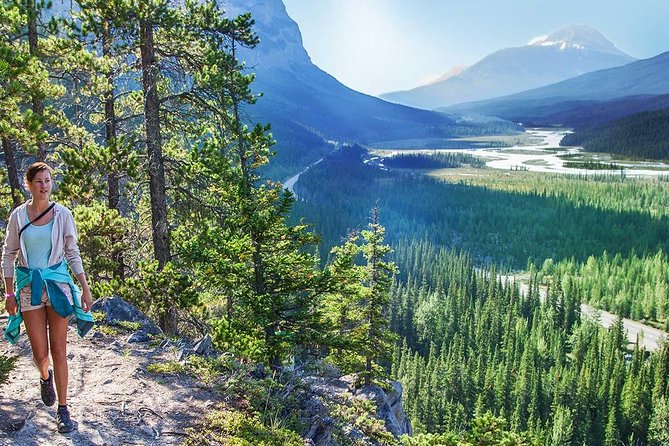
This tour is built like a highlights reel, but it’s not sloppy. You’ll be on the Moose Bus with a professional guide who helps you understand what you’re seeing and where the region’s stories connect. The pacing is “active viewing”: enough time at each stop to get photos and stretch your legs, but not so much downtime that you lose the momentum.
You start in Vancouver and you’ll end in a different location than where you began, so plan your next move with that in mind. The group stays limited to 24 travelers, which matters because it helps the guide keep the day running on schedule even when weather shifts.
The biggest win for me is the variety. You go from a west coast rainforest waterfall vibe early in the trip to alpine lakes, glaciers, and Jasper waterfalls by the end. That mix is a strong argument for taking a short tour rather than trying to DIY all of this with trains, transfers, and separate reservations.
You can also read our reviews of more tours and experiences in Vancouver.
Value for the price: what $1,121.24 really covers
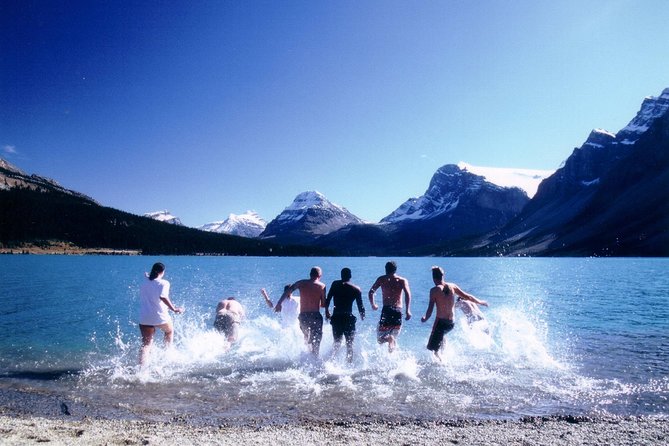
At $1,121.24 per person for roughly four days, the headline price can look steep until you see what’s included. You’re paying for logistics done for you: transportation by bus, key park fees, and the structure that squeezes in major stops across BC and Alberta.
Here’s what you get that protects your budget:
- Breakfast included, plus 3 dinners
- 3 nights accommodation in mixed-gender hostel dorm-style rooms
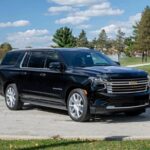
- Moose Bus transportation
- National park fees, including exclusive Moraine Lake access
- Skaha Lake paddleboarding is included during mid May to September
What’s not included is also important. Meals outside what’s listed under inclusions aren’t covered, so you’ll want to budget for lunches and any snacks you grab along the way. Also, some optional activities may have extra costs—like the Lake Revelstoke water options.
In plain terms: if you were to plan these stops yourself, you’d likely spend money on transportation, admission, and lodging—and you’d still have to solve the timing puzzle. This tour is basically paying for that puzzle to be solved for you.
Hostel dorm nights: convenient, social, and not for everyone
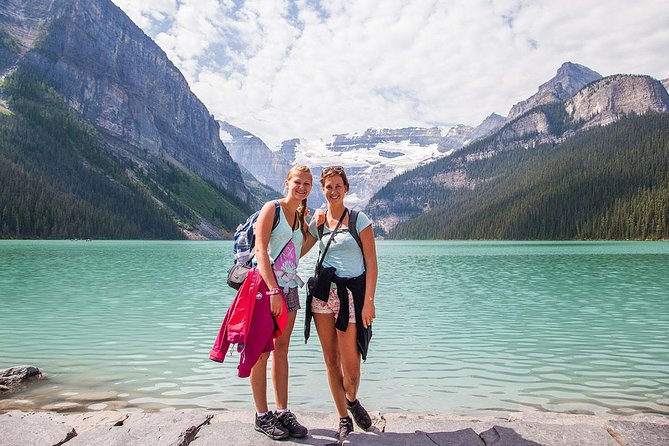
The tour includes 3 nights in mixed-gender, hostel-dorm style rooms. This can be a great way to keep costs down and meet people quickly. It also means you should pack with that reality in mind: expect shared space, shared bathrooms (not specified, but typical for dorm setups), and less control over noise and privacy.
If you’re traveling solo, this type of lodging often turns into an advantage because you’re already in the same “reset zone” each night. You can swap photo tips, compare hiking footwear choices, and plan what you want to tackle tomorrow.
Your best move is to treat the dorm as a base, not a retreat. Bring earplugs if you’re sensitive to noise, keep valuables simple (not spread all over), and use your daypack for what you’ll need right away.
Day 1: Bridal Veil Falls, Hope’s carving town stop, and Skaha Lake paddleboarding
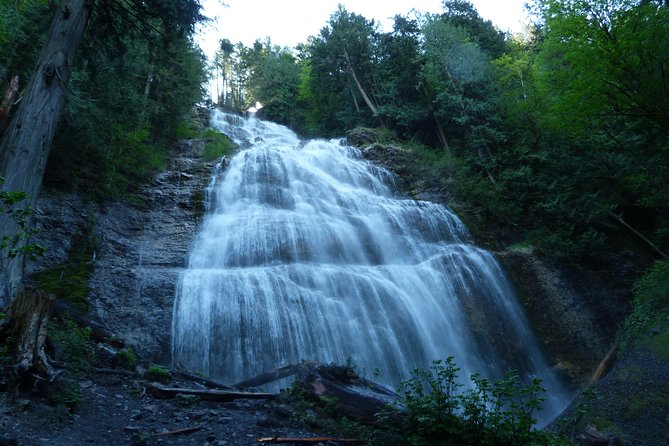
Day one is all about variety: rainforest, small-town stops, lakes, and an Indigenous-inspired dinner. You begin with Bridal Veil Falls Provincial Park, where you’ll take a short walk through a west coast rainforest. It’s a classic change-of-presentation moment—lush greenery up close, then a waterfall payoff.
Next is Hope, known as the Chainsaw Carving Capital of Canada. This is a quick stop to pick up lunch supplies. It’s also useful because it breaks up the long bus stretch and gives you a chance to stock up before the day turns more scenic and active.
Then you head to E.C. Manning Provincial Park in the Cascade Mountains area. Here, the focus is a serene pause and an easy view of places like Lightning Lake. This isn’t a day-long hike; it’s a “get your bearings” nature stop. If you’re the type who likes a calm reset before you hit the bigger alpine icons later, this works well.
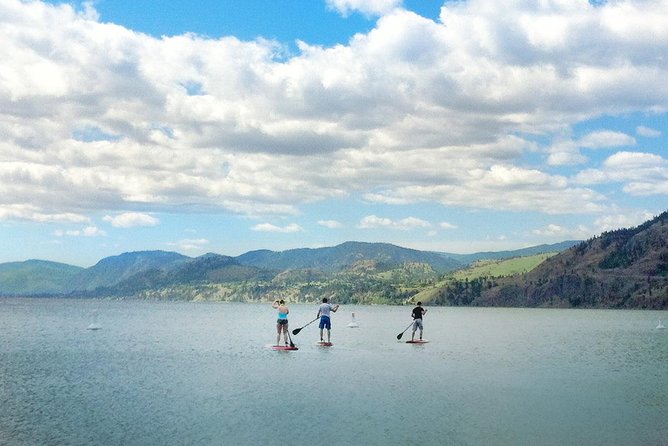
After that, you roll into Penticton for Skaha Lake and get paddleboarding on the serene water. The included paddleboarding timing matters: it’s listed as included mid May through September. If you’re traveling outside that window, you may not get the same included water time, so check your dates carefully when booking.
You finish the day in Kelowna, with dinner at Kekuli Café, noted for its Indigenous-inspired cuisine. Even if you’re not doing big meals planning, a scheduled dinner like this helps remove one more stress point from a tight four-day trip.
Day 2: Frind Estate Winery, Craigellachie history, Lake Revelstoke water time, then Lake Louise
Day two starts with a food-and-views moment at Frind Estate Winery bakery in Kelowna. You get pastries with vineyard and Okanagan Lake views. It’s also a fun reminder of the region’s local legends—keep an eye out for Ogopogo, the famous mythical creature people associate with Okanagan Lake.
Then you drive to Craigellachie, a historic spot where the Last Spike of the Trans-Canadian Railway was driven. Even if you’re not a history buff, this stop adds context for why Canadian railways helped shape tourism, settlement, and access to remote places. It’s a quick one (15 minutes), but it gives meaning to the route you’re traveling.
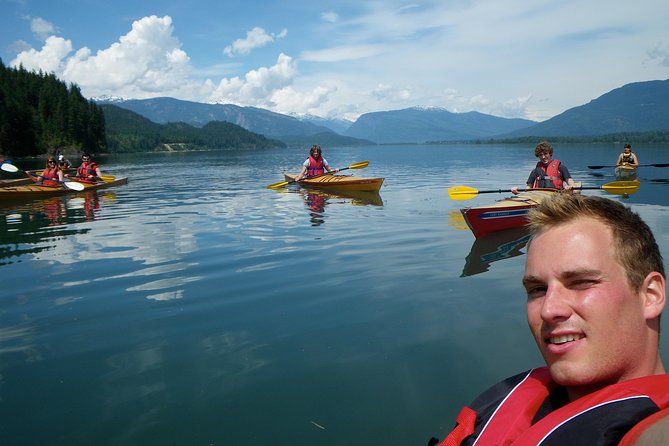
After that, you reach the “water adventure zone” around Lake Revelstoke with Natural Escapes Kayaking, Canoeing and SUP. Kayaking is the highlight described here, and it’s on one-of-a-kind, handmade wooden kayaks. The key detail: this part is not included. So you can treat it as an optional splurge if your budget allows, or skip it and enjoy the lake in a simpler way (a swim or relaxed time is mentioned as an option).
Finally, the day turns into alpine travel as you cross Kicking Horse Pass into Alberta and arrive at Lake Louise for the night. That transition is part of what makes this trip feel like a true Rockies experience: you can literally feel the region change from lower-elevation lakes to dramatic mountain terrain.

Day 3: Lake Louise and Moraine Lake access, plus Crowfoot Glacier and Peyto’s wolf shape
Day three is where many people start thinking, this is really the Rockies. You begin at Lake Louise for about an hour. This gives you time for photos and a short orientation without rushing.
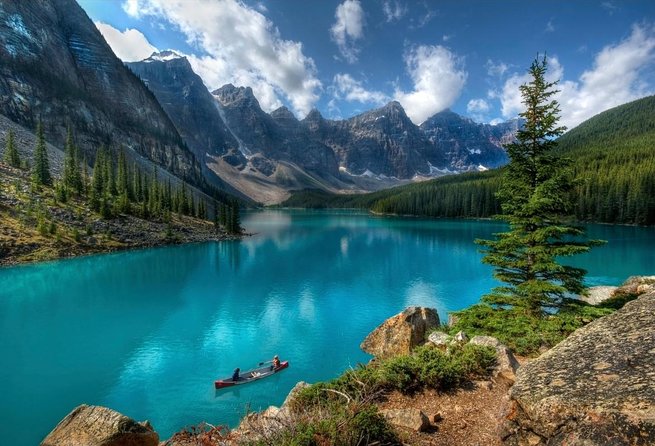
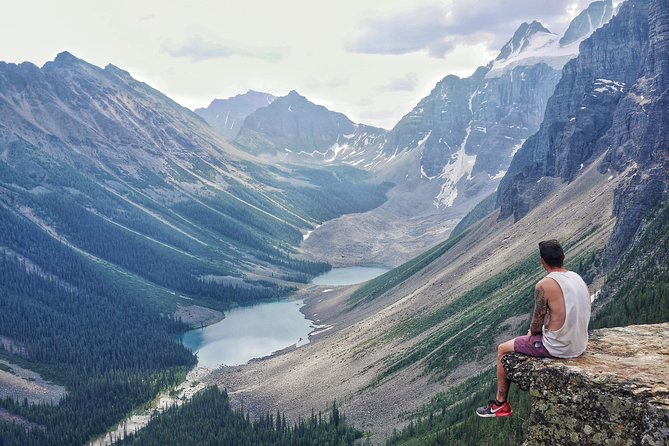
Next is Moraine Lake, famous for its scenery and the surrounding Valley of the Ten Peaks. The big advantage is that Moraine Lake access is included, and it’s described as exclusive access. That matters because Moraine Lake often comes with timing and crowd-management challenges when you plan independently. On a short tour, having it handled for you is a big deal.
From there you visit Crowfoot Glacier, with a short stop (about 30 minutes). The glacier toe view is a strong “wow” moment because the formations can look different from many angles. You’ll also have a chance to spot ice shapes and patterns that don’t show up as clearly in photos online.
Then you go to Peyto Lake, described as a favorite in the Rockies. What makes it memorable is the wolf-shaped outline and the vibrant turquoise water against the mountain backdrop. It’s a perfect stop for quick photos and a little breathing room to take in the view.
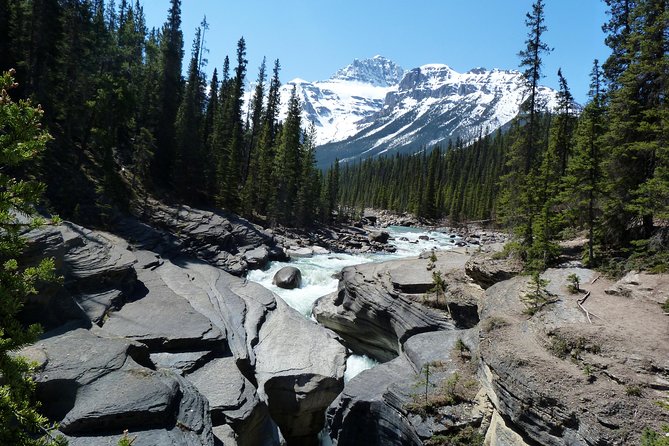
You end the day at Mistaya Canyon, where you’ll take a short walk to see the Mistaya River and the rock formations it carved. This is the trip’s “movement on the ground” moment—still not a hard hike, but enough walking to feel like you’re part of the place, not just looking at it.
Day 4: Columbia Icefield’s Athabasca Glacier toe hike and Jasper’s two waterfall stops
On the final day, you go big with the Columbia Icefield, the largest in the Rocky Mountains covering 325 square kilometers. You’ll take a short hike to the toe of the Athabasca Glacier, about two hours total at this site. This is one of the more physically involved moments on the tour and also the one most likely to stick in your memory because it’s close enough to feel real and weighty.
Then you enter Jasper National Park and focus on powerful water. First is Sunwapta Falls, a cascade plunging through a dramatic gorge. Even with limited time (about 30 minutes), the scale of the waterfall does the heavy lifting.
Next is Athabasca Falls, another rugged canyon waterfall. You’ll get the same “30 minutes and it’s memorable” approach here: see it, photograph it, and walk the short areas the stop allows.
Day four is the emotional closer. By this point, you’ve already seen alpine lakes and glaciers, so the waterfalls hit with a different kind of drama: it’s not calm mirror water anymore. It’s force and motion.
Guide and group vibe: learning, not just driving
A good guide can turn a crowded bus day into something that feels personal and worth the money. The tone here is friendly and helpful, and past groups have highlighted guides by name—Mike and Troy have come up as strong examples of people who make sure you learn something at each stop.
That matters because many people come to the Canadian Rockies with a checklist: Lake Louise, Moraine, glaciers, waterfalls. The guide’s job is to help you understand what you’re actually seeing—why the lakes look the way they do, what shapes the glaciers, and how the parks connect across the region.
You also get social momentum. With max 24 travelers and hostel-style lodging, you’re not stuck wandering alone all day. If you’re a solo traveler, that structure helps you meet people without having to force conversations.
Practical tips: fitness, weather, luggage limits, and what to pack
This tour operates in all weather. That doesn’t mean you’ll always be in full rain, but it does mean you should dress like conditions can change quickly. You’ll be outside at multiple stops, including the glacier walk, and you’ll be near water at at least one lake activity.
The physical level is described as moderate fitness. Most stops are short walks—think 30 minutes here and there, plus that longer two-hour glacier toe hike. If you can handle uneven ground for a couple of hours and you’re comfortable walking regularly, you should be in good shape.
Packing is where many people get tripped up. You’re limited to:
- One main backpack/bag/suitcase: max 23 kg (50 lbs) and max 158 cm total linear dimensions (Height + Width + Depth)
- One small daypack carried in the passenger compartment
- If your luggage is overweight or oversize, there can be a $50 per bag fee, and acceptance is only decided at departure
So pack for layers, not for fashion. Bring:
- Sturdy walking shoes
- A rain layer you’ll actually wear
- Sun protection (glacier country can still be bright)
- A swimsuit if paddleboarding is on your dates
- A light layer for early starts
Also keep an eye on meal planning. Breakfast and some dinners are included, but lunch is not broadly covered—there’s a lunch-supply stop in Hope—so you’ll want to budget for a couple of purchased meals or snacks.
Should you book the Coho Banff and Jasper 4-day tour?
I’d recommend this tour if you want a high-impact Rockies experience without the stress of planning every reservation and transfer. It’s especially strong if you care about:
- Moraine Lake access being handled for you
- Seeing major icons in only four days
- A guided approach that adds context, not just movement
- Meeting people, particularly since the accommodation is hostel dorm style
I’d think twice if you need privacy and quiet at night. Dorm lodging is part of the value, but it’s also part of the trade-off. And if you’re traveling outside mid May to September, the included Skaha Lake paddleboarding may not apply the same way, so verify your exact travel window before committing.
If you’re looking for a practical, social, well-structured way to see Banff-area icons and Jasper’s waterfalls with one professional driver guiding the whole arc, this is a strong choice.
FAQ
What’s included in the tour price?
Breakfast is included, along with 3 nights of accommodation in mixed gender hostel dorm-style rooms. You also get Moose Bus transportation, services of a professional local guide/driver, national park fees (including exclusive access to Moraine Lake), paddleboarding on Skaha Lake during mid May to September, and 3 dinners.
Where does the tour start and where does it end?
The tour starts in Vancouver. It ends in a different location than where it started, and the exact end details are provided in the booking information.
Do I need to buy admission tickets for the national parks?
National park fees are included, including exclusive access to Moraine Lake.
Is paddleboarding included for everyone?
Paddleboarding on Skaha Lake is included only during mid May to September.
What kind of fitness level do I need?
The tour is described as requiring moderate physical fitness. Most stops involve short walks, plus a longer hike to the toe of the Athabasca Glacier.
What are the luggage limits on the bus?
You can bring one reasonably sized main backpack, bag, or suitcase up to 23 kg (50 lbs) with maximum linear dimensions of 158 cm. You can also bring one small daypack. Oversize or overweight luggage may be refused or accepted with a $50 fee per bag at departure.