REVIEW · VANCOUVER
Talking Trees: Stanley Park Indigenous Walking Tour Led by a First Nations Guide
Book on Viator →Operated by Talaysay Tours · Bookable on Viator
Stanley Park has another story. This Talking Trees Indigenous walking tour takes you through the forest around Beaver Lake with a trained First Nations Cultural Land Ambassador, sharing Coast Salish history and how plants were used for everyday life. I find it interesting because it turns a famous city park into a living place with meaning, not just scenery.
I love the plant-focused storytelling—your guide points out what’s used for food, shelter, art, and medicine. I also like that the tour includes a warm cup of Indigenous Talaysay Hush Tea (single cup), which makes the walk feel more personal and less like a standard lecture.
One possible drawback: there’s no hotel pickup, so you’ll need to get yourself to the Stanley Park Bus Loop meeting area.
In This Review
- Key things that make this tour worth your time
- Why a Talking Trees Beaver Lake walk changes how you see Stanley Park
- Finding the Stanley Park Bus Loop meeting spot (and who you’ll meet)
- The Beaver Lake forest walk: what happens on the trail
- Plants you’ll likely learn to notice for food, medicine, shelter, and art
- Coffee or Talaysay Hush Tea: the included break that feels like part of the story
- How much walking is involved, and is it truly easy?
- Price and value: what $60.08 buys you in Stanley Park
- Departure times, group size, and why meeting the guide matters
- Who should book this (and who might want a different outing)
- Quick tips to get the most from your Talking Trees walk
- Should you book Talking Trees in Stanley Park?
- FAQ
- Where is the meeting point for the Talking Trees tour?
- How long is the tour?
- How far do we walk?
- Is the walking difficult?
- What language is the tour offered in?
- What’s included in the price?
- Is parking included?
- Is hotel pickup included?
- Is public transportation to the meeting point included?
- Are service animals allowed?
Key things that make this tour worth your time
- A First Nations Cultural Land Ambassador guides the walk with personal, family-rooted perspectives (you might meet guides such as Gavin, Shay, Alfonso, Wes, Tyrone, or Patrick, based on prior tours).
- Beaver Lake loop walk is easy and relaxed, about 2 kilometers total, with regular stops for questions.
- Plants are taught as tools for life: food, medicine, shelter, and even traditional uses tied to cedar and other local species.
- Tea and/or coffee are included, featuring Talaysay Hush Tea (served as a single cup).
- You end right where you started, so it’s simple to grab a bus, cab, or keep exploring Stanley Park.
Why a Talking Trees Beaver Lake walk changes how you see Stanley Park
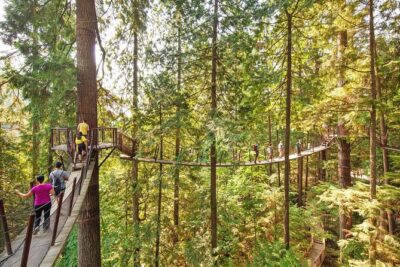
Stanley Park can feel like a postcard: trees, paths, and famous views. But this tour reframes the place as traditional territory and a land people have managed for generations. Instead of scanning for animals or taking photos nonstop, you slow down and pay attention to what’s growing around you and why it mattered.
What I like most is that you’re not just hearing facts. You’re learning how the forest was used—where plants fit into food, medicine, materials, and cultural practice. That shift makes the park feel less like a backdrop and more like a system of knowledge you can actually notice with your own eyes.
And because the walk is centered on Beaver Lake, you get a clear focus. You’re not zig-zagging through a dozen sights. You’re following a loop that gives you time to absorb the stories at a human pace.
You can also read our reviews of more walking tours in Vancouver


Finding the Stanley Park Bus Loop meeting spot (and who you’ll meet)
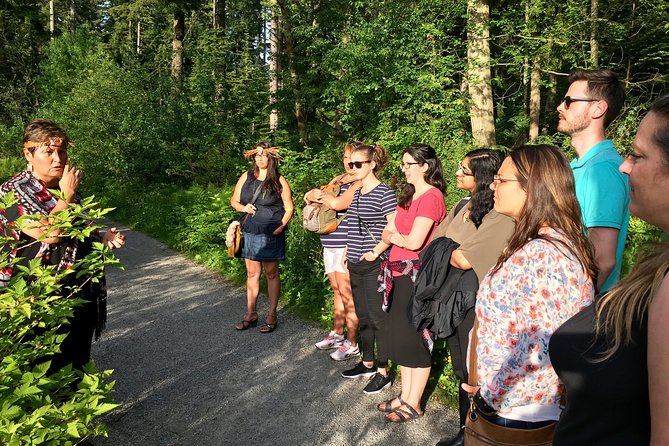
Your tour starts at the Stanley Park Bus Loop, beside the Mini Train and Aquarium parking area. If you’re driving, you enter the park from Georgia Street, take the Causeway, and use the Pipeline Road exit at the roundabout; then you continue past the Rose Garden and turn toward the Mini Train/Aquarium/Bus Loop parking area.
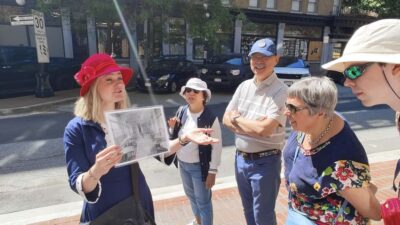
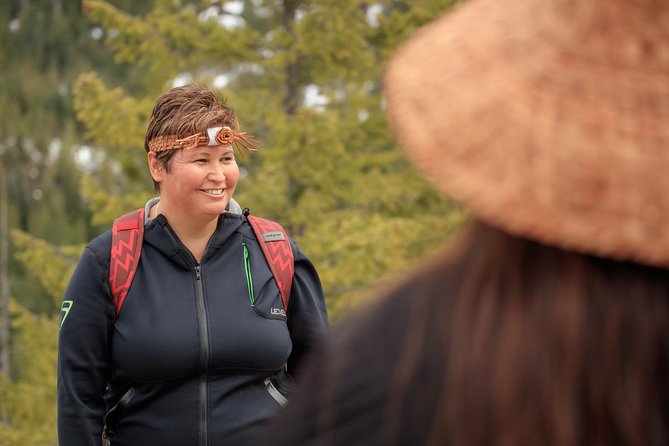
Check in at an open-air wooden gazebo inside the bus loop. The guide—your Cultural Land Ambassador—waits in the gazebo area, where the group gathers, introduces itself, and then heads out together toward Beaver Lake.
Practical tip: arriving a little early helps. This is a park setting, not a hotel lobby. If you’re coming during busier hours, give yourself a few extra minutes to locate the gazebo and meet the group calmly.
The Beaver Lake forest walk: what happens on the trail
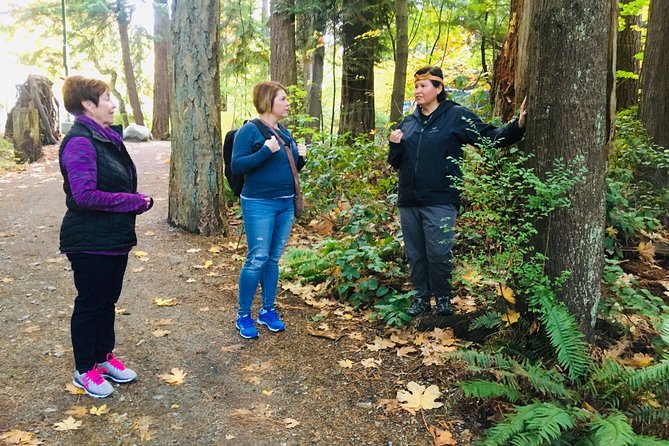
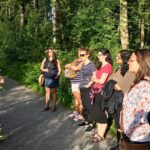
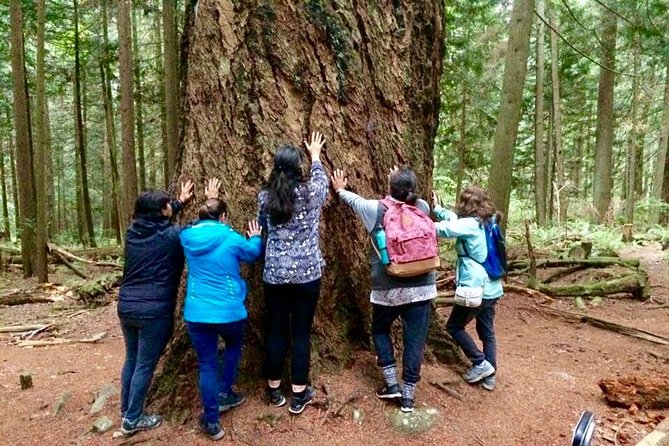
The main portion is a guided interpretive walk that loops around Beaver Lake. The total walking time is about 90 minutes, and the pace is intentionally relaxed, with pauses built in. That matters because the stories depend on observation. You’ll stop to look at trees and plants up close, listen, then move on.
Expect the guide to share both personal context and broader cultural teaching. In the first phase, you’ll hear some background from your Cultural Land Ambassador—family history and how they connect to the land. Then the walk turns into a plant-and-landscape lesson: what you’re seeing, what it was used for, and how people lived with and respected it.
This is also a good tour for questions. The structure gives you time to ask things without feeling rushed. If you’re the type who always wonders why a certain tree is everywhere, this tour gives you a reason to keep looking.
Plants you’ll likely learn to notice for food, medicine, shelter, and art
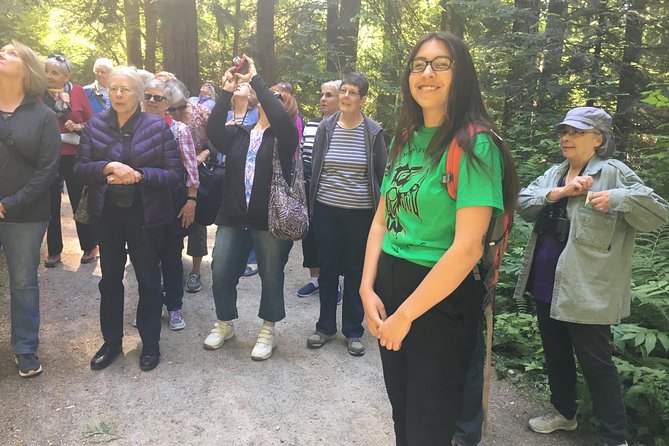
This tour isn’t only about naming trees. It’s about understanding use. Your guide points out local plants and explains traditional harvesting for food, shelter, art, and medicine.
From tour experiences, cedar comes up in a way that really sticks—one guest noted learning how cedar parts were used, including references to items made from cedar material. You may also hear about medicinal properties of trees and bushes, with explanations tied to how knowledge was passed down.
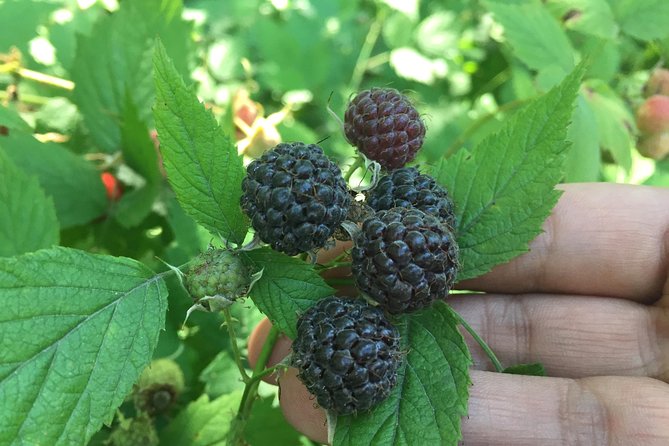
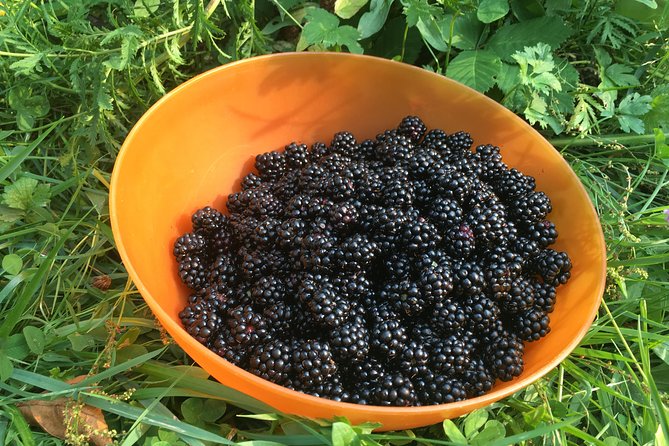
Seasonal changes can affect what’s visible and what a guide can safely discuss, but you should still leave with a new way of looking at the forest floor and the understory. And yes, on at least some walks, you may hear stories that include tasting—one participant shared that berries were picked and eaten during the experience.
The bigger takeaway is mindset. You’re learning to read the landscape like a pantry and a pharmacy—without assuming you’re collecting anything yourself. The point is respect and understanding, not grabbing souvenirs from the trail.
Coffee or Talaysay Hush Tea: the included break that feels like part of the story
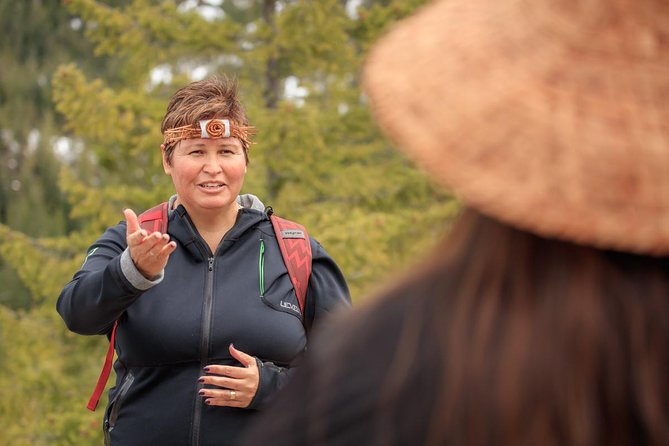
You’ll receive coffee and/or tea during the tour, and the included tea is Talaysay Hush Tea (single cup). In a place like Stanley Park, where weather can shift fast, a warm drink helps you stay comfortable while you keep listening.
This tea stop also adds rhythm. The walk stays active, but the break creates a natural moment to ask questions, compare notes, and settle in. If you’re visiting on a cool or rainy Vancouver day, this little included comfort is honestly a smart value.
You can also read our reviews of more guided tours in Vancouver


How much walking is involved, and is it truly easy?
The walking portion is about a little more than 1 mile, roughly 2 kilometers, and it’s described as an easy level suitable for all fitness levels. That lines up with what I’d look for if I wanted something active but not exhausting.
You’re also walking in shaded park trails, not steep terrain. One reviewer noted that an 80-year-old guest using a cane found the walk comfortable. That’s not a guarantee for everyone, but it suggests the pace and path choice are meant to be workable for many bodies.
Still, consider this: you will be on your feet for about 1.5 hours total, including time spent stopping and talking. If you have mobility limitations or you tire quickly, wear supportive shoes and plan for slow moments.
Price and value: what $60.08 buys you in Stanley Park
At about $60.08 per person for roughly 1 hour 30 minutes, this isn’t a cheap sampler tour. But it’s not trying to be. You’re paying for a guided, in-person interpretation led by a trained First Nations Cultural Land Ambassador, plus an included warm drink.
Here’s why that feels like value: the tour is structured around meaningful land-based knowledge and hands-on observation. You’re not just learning from a screen. You’re learning from a person with lived cultural ties who can answer questions in real time.
You also get a clear time commitment. In Vancouver, that matters. You can fit this into a half-day without it swallowing your schedule. And because you end back at the same meeting point, you don’t add extra transport friction to the cost.
If your priority is city parks as history-free green space, this may feel pricier than a standard walk. If your priority is getting perspective on how people used this land, the price starts to make sense fast.
Departure times, group size, and why meeting the guide matters
The tour offers several departure times, which is practical if you’re trying to build a Vancouver day around weather or other plans. It also helps if you’re juggling kids, elderly relatives, or just your own energy levels.
There’s a maximum of 200 travelers, but that number alone doesn’t tell the whole story. What I like in the experience design is that the walk is paced and discussion-friendly, so your guide has chances to connect with the group rather than reading from a script.
The guide’s delivery is a big part of why this tour gets strong reactions. People specifically mention warmth, patience with questions, and guides who share personal stories alongside cultural teachings. Names that have appeared in previous experiences include Gavin, Shay, Alfonso, Wes, Tyrone, Patrick, and Christina-type variants—so you may meet a guide with a style that matches how you like to learn.
Who should book this (and who might want a different outing)
This is a great fit if you want:
- A calmer, forest-focused experience inside a famous park
- Culture tied to the land—especially Coast Salish context and how plants were used
- An easy walk with stops for questions (not a run-for-the-next-stop sprint)
- Something educational that still feels outdoorsy, not classroomy
It’s also a nice choice for families. One experience included kids around 8 and 10, and the tour worked well at a steady pace. If you’re into horticulture or garden history, the plant-based focus can be a strong match too.
You might consider another option if your ideal Stanley Park day is purely about big photo viewpoints and quick scenic stops. This tour is slower and more interpretive than panoramic.
Quick tips to get the most from your Talking Trees walk
Bring layers. Even in Vancouver’s greener months, the forest can feel cooler, and you’ll be outside for most of the tour. Comfortable shoes matter more than fancy gear because you’ll walk a loop with pauses.
Arrive early enough to feel settled. The meeting is at the Stanley Park Bus Loop gazebo, so a few extra minutes can prevent that awkward early-tours panic.
And come with one or two questions. You’ll get more out of the guide’s stories if you’re curious in real time—asking about a plant, a use, or how people learned to read the forest.
Should you book Talking Trees in Stanley Park?
If you want a Stanley Park experience that goes beyond trees-as-decoration, I think this is a smart booking. The included Talaysay Hush Tea, the easy pace, and the fact that you learn from a First Nations Cultural Land Ambassador make it a standout value for people who care about real context—not just green scenery.
Book it if you’re happy with a guided walk centered on Beaver Lake, and you want to understand how Coast Salish people and other First Nations groups historically interacted with the plants around you. Skip it only if your day plan needs nonstop sights and minimal listening time.
FAQ
Where is the meeting point for the Talking Trees tour?
You meet at the Stanley Park Bus Loop in Vancouver, BC, in an open-air wooden gazebo inside the bus loop area.
How long is the tour?
The walking experience totals about 1 hour 30 minutes approximately, with about 90 minutes for the guided walking portion.
How far do we walk?
The walking portion covers roughly a little more than 1 mile, about 2 kilometers total.
Is the walking difficult?
It’s described as an easy level walk appropriate for all fitness levels, with a relaxed pace and regular stops.
What language is the tour offered in?
The tour is offered in English.
What’s included in the price?
Included are the local Cultural Land Ambassador (guide) and coffee and/or tea, including Talaysay Hush Tea (single cup).
Is parking included?
Parking fees in Stanley Park are not included.
Is hotel pickup included?
No, hotel pickup and drop-off are not included.
Is public transportation to the meeting point included?
No, public transportation is not included in the tour cost, but the meeting point is near public transportation.
Are service animals allowed?
Yes, service animals are allowed.