REVIEW · VANCOUVER
The Really Gay History Tour in Vancouver, Canada
Book on Viator →Operated by Forbidden Vancouver · Bookable on Viator
Vancouver has queer stories hiding in plain sight. This walking tour connects the streets of Downtown, the West End, and the Davie Street gaybourhood with LGBTQ2+ history, told by your guide as you move. You’ll hear moments ranging from early Pride roots to major public-health crises tied to names you may have heard in passing, but never really connected to place—ending at Jim Deva Plaza in the heart of Davie Street.
I really like the format: 2 hours on foot means you get city context fast, instead of staring at a screen. I also like the guide-led storytelling—Glenn is repeatedly described as a master at weaving people, conflict, and community into a single clear route, so the history lands as lived experience, not just dates. One small note: this is a walking tour, so you’ll want to be comfortable with a moderate pace and sensible shoes.
One possible drawback: the tour contains explicit language, and the company doesn’t recommend it for kids under 14. If that’s a dealbreaker for your group, it’s worth deciding before you show up.
In This Review
- Quick hits before you go
- Why this walk works in Vancouver (and not as a lecture)
- Meet at Burrard, then follow the story west (Trees Organic to Jim Deva Plaza)
- Downtown chapter: courts, drag kings, churches, and the people behind the headlines
- The West End and early Pride roots: tree-lined streets and turning points
- Nelson Park and the idea of urban oases
- Davie Street finish: where to go after (without changing plans)
- Price and value: why $29.29 for 2 hours is a solid deal
- Comfort, weather, and the pace you should expect
- Who should book this tour (and who might look elsewhere)
- Should you book the Really Gay History Tour in Vancouver?
- FAQ
- How long is the Really Gay History Tour?
- How much does the tour cost?
- Where do I meet the guide, and where does the tour end?
- What time does the tour start?
- Is the tour offered in English, and do I get a mobile ticket?
- Does it run in rain, and what should I wear?
- Is it appropriate for children, and does it include explicit language?
Quick hits before you go
- Glenn’s guide style: lively, well-researched storytelling that connects events to real Vancouver streets.
- Small group size: capped at 20 travelers, so it feels personal and not like a school bus.
- From Downtown to Davie Street: you’ll cover several recognizable areas in about two hours.
- Big themes, street-level examples: Imperial Court life, drag kings, gay ministers, Patient Zero, and the GRID crisis show up in the route.
- Stops with meaning: you’ll pause at places like Jim Deva Plaza and Nelson Park, where community life is visible.
- A practical half-day plan: finishes in the middle of the action, so you can keep going after.
Why this walk works in Vancouver (and not as a lecture)
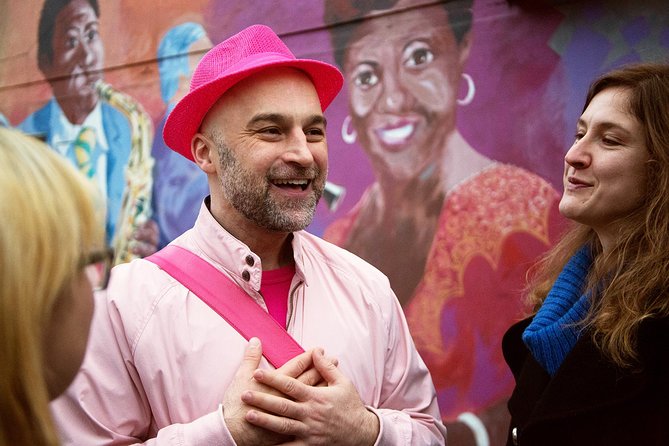
There’s something powerful about learning LGBTQ2+ history by walking it. Vancouver’s queer past isn’t locked in a museum case—it’s written into blocks, storefronts, public squares, and the way neighborhoods grew around community needs. On this tour, the guide’s job is to keep the story moving while you also get your bearings fast.
You’ll also get a useful balance of tone. The material can cover pain and resistance, but it also highlights joy, organizing, and community spaces. The result is not just facts on paper; it’s the feeling of how people found each other and made public life possible, even when it wasn’t easy.
And because it’s two hours, you’re not forced into a whole day of history fatigue. You can slot it in on a travel day, then still have time for other Vancouver priorities afterward.
You can also read our reviews of more walking tours in Vancouver
Meet at Burrard, then follow the story west (Trees Organic to Jim Deva Plaza)
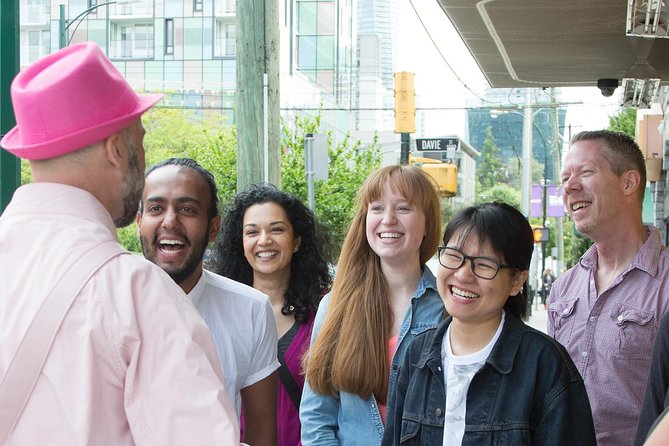
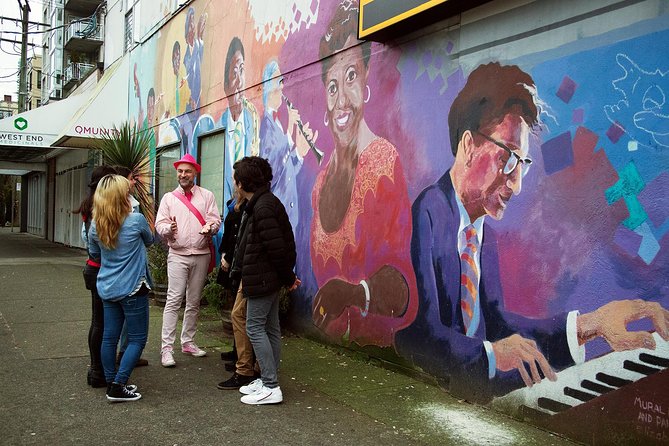
The tour starts at 930 Burrard Street, outside Trees Organic Coffee Shop. The meet-up point is easy to find, and the guide is described as the man in pink, so you can spot them quickly.
It runs about 2 hours (approx.) and finishes at Jim Deva Plaza, 1200 Bute Street. That end point matters. Jim Deva Plaza is right where many visitors want to spend time next—near the Davie Street area with bars and restaurants—so your history walk doesn’t end with a bus ride and a shrug. You end in the neighborhood where the present and past feel connected.
One practical detail I appreciate: you should arrive 10 minutes early so check-in doesn’t eat into your first stop. Tours depart on time, and no one wants to miss the opening set-up.
Downtown chapter: courts, drag kings, churches, and the people behind the headlines
As you move through Downtown and toward the West End, the tour frames LGBTQ2+ life with several different lenses: performance, faith communities, activism, and public crisis.
Expect stops that connect to:
- Imperial Court coronations (a glimpse of how pageantry and community recognition helped build visibility)
- Drag kings at the Quadra (drag as culture, not costume—also as community power)
- Gay ministers at the United Church (a reminder that some LGBTQ2+ allies and leaders worked inside religious spaces)
- Patient Zero and the GRID crisis (where the narrative shifts toward fear, stigma, and public health)
The value here is that you’re not getting one straight-line “LGBTQ history = Pride parade” story. You’re seeing that the community existed across many kinds of institutions and public moments—some celebrated, some contested.
A good way to think about these stops: each one is a different door into the same larger story. Performance shows how people expressed identity and gathered. Faith shows how acceptance and conflict played out in mainstream spaces. Public-health topics show what happened when the world turned its attention toward LGBTQ communities—and how courage often looked like staying informed, advocating, and caring for one another.
The West End and early Pride roots: tree-lined streets and turning points
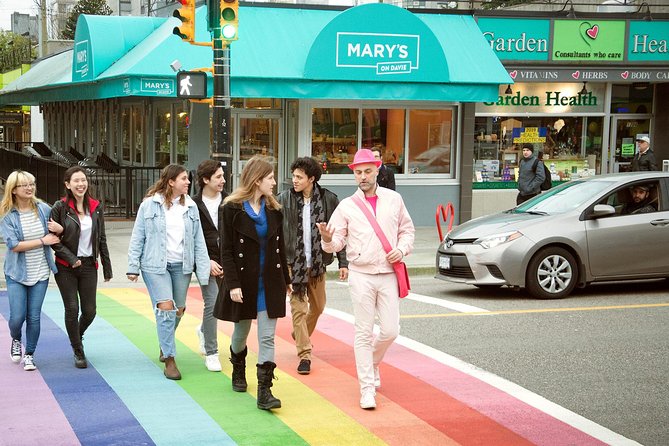
Once the route is established, the walking flow starts to feel like a guided tour of cause-and-effect. You’ll pass through the historic tree-lined West End and hear how earlier community events shaped what later Pride felt like.
You’ll cover:
- the city’s earliest Pride parade
- Jim Deva Plaza as a landmark in the narrative (not just a convenient meeting end)
- bookstore bombings (a stark moment that shows how violence targeted queer spaces)
- a transgender campaigner who blew the whistle on the biggest crime in Vancouver history (the tour uses this to highlight activism and the stakes of speaking out)
- Vancouver’s secret gay village
- the story of two-spirited warrior Gone to the Spirits
This is the part of the experience that I’d call emotionally “honest.” It doesn’t keep everything light just because it’s a walking tour in a tourist city. It connects queer life to risk, organizing, and the real-world consequences of visibility.
Also, you’ll get something practical out of it: walking this route helps you understand where the community sat in relation to the rest of the city. You’re learning geography, not just chronology.
Nelson Park and the idea of urban oases
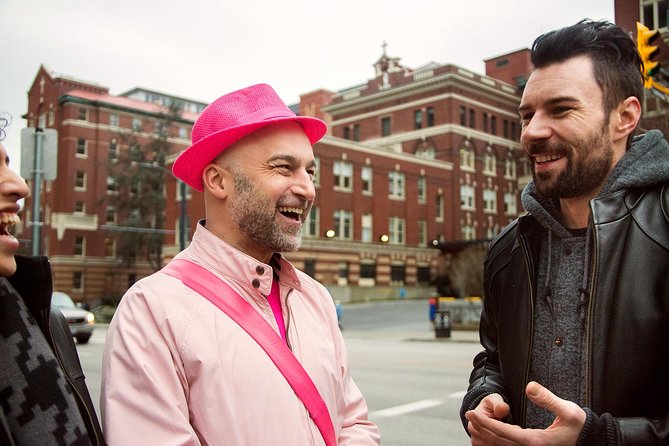
The tour includes a stop at Nelson Park, described as an urban oasis. Even if you’ve been to parks in other cities, this kind of stop is different because it’s framed as space with a purpose.
Parks and public areas can act like community breathing rooms—places where people connect in ways that feel less formal than a bar or event. When the guide points out what makes Nelson Park significant in the LGBTQ2+ story, you start to notice details you’d otherwise skip: sightlines, how people move through an area, and why certain public spaces become “go-to” meeting points over time.
It’s also a nice pacing break. After a couple of heavier topics, this kind of stop helps your brain reset so you can take in the next story with clarity instead of overload.
You can also read our reviews of more historical tours in Vancouver

Davie Street finish: where to go after (without changing plans)
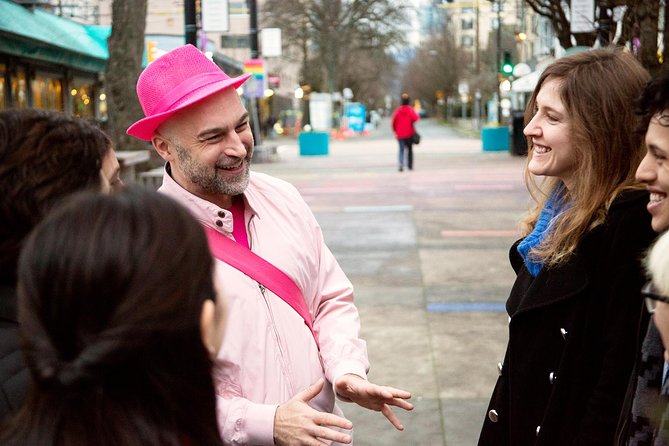
The tour ends right in the middle of the Davie Street village—then you’re free to keep exploring on your own. Since you finish at Jim Deva Plaza, you can treat the last segment as the “arrival” moment: you get a history lesson, then step into the neighborhood that represents the living version of that story.
This is a smart design for day-planning. You don’t have to squeeze a second transit-heavy activity into the schedule. You can grab a meal nearby, do a shop wander, or simply spend time in the area the tour already made meaningful.
And if your day includes other Vancouver classics, you’ll be better positioned to navigate them now. You’ll have street-level familiarity with the West End approach and the way the neighborhood grid supports foot travel.
Price and value: why $29.29 for 2 hours is a solid deal
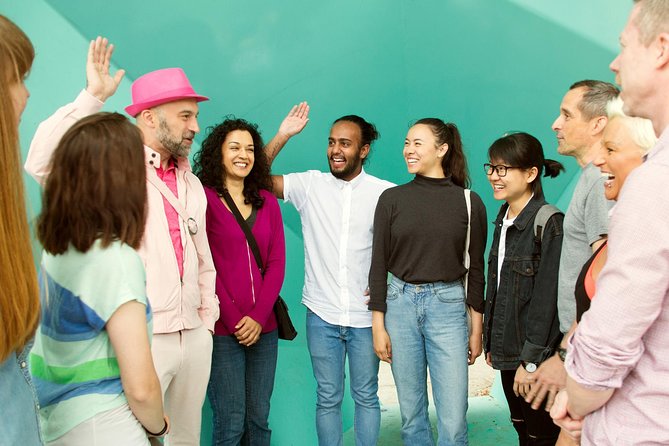
At $29.29 per person for roughly two hours, this is priced like a walking tour that knows what it’s selling: a professional guide, a small-group feel, and a route that covers multiple key nodes of the LGBTQ2+ story.
Here’s the value logic I’d use if I were booking last-minute:
- You’re paying less than many “special interest” tours, but you’re getting a guided narrative that connects places, not just names.
- The group cap at 20 travelers helps the experience stay human.
- The route structure (Downtown → West End → Nelson Park → Davie Street finish) gives you “two-for-one” value: history + immediate neighborhood orientation.
It’s also a good choice if you want to learn something meaningful without turning your whole vacation into a classroom.
Comfort, weather, and the pace you should expect
This tour runs rain or shine, but many stops are described as under cover. That’s helpful in Vancouver weather, where plans can change fast without warning.
You should wear sensible shoes because you’re walking. The tour is described as suitable for people with a moderate physical fitness level. You don’t need to be an athlete, but you should be comfortable with a steady walking pace.
On warm days, bring sunscreen. This one sounds obvious, but it’s a detail that makes the difference between a pleasant walk and a “why are my shoulders on fire” walk.
If language is a concern for your group, remember: this tour contains explicit language. That’s not a small footnote; it’s part of the tour’s delivery and subject matter.
Service animals are allowed, and the start point is near public transportation. The tour also uses a mobile ticket, so you’ll want your phone charged and ready.
Who should book this tour (and who might look elsewhere)
I’d recommend this tour if you want LGBTQ2+ history in a form that’s active and place-based. You’ll likely enjoy it most if you like walking, asking questions, and hearing a guided narrative that connects multiple eras and themes.
It’s also a strong pick for first-time Vancouver visitors who want to understand how the city’s queer community shaped the neighborhoods you’ll actually walk through later.
You might think twice if:
- your group needs a family-friendly, no-explicit-language experience (it’s not recommended for guests under 14)
- you don’t handle city walking well (moderate fitness is part of the deal)
- you prefer purely celebratory history rather than the full spectrum, including hard topics like violence and public-health crises
Should you book the Really Gay History Tour in Vancouver?
If you’re coming to Vancouver for the first time, or even if you’re returning and want a deeper view of the city, I think this is a smart booking. The price is reasonable for a guided, place-based experience, and the route ends exactly where you’ll want to spend time anyway. The best part is the tone: you get both the hard moments and the community-building energy, tied to streets you can point to.
My call: book it if you’re comfortable with explicit language and a moderate walking pace, and you want queer history that feels real because it’s anchored in Vancouver’s actual geography. If either of those doesn’t fit your group, it’s better to choose a different style of tour.
FAQ
How long is the Really Gay History Tour?
It lasts about 2 hours.
How much does the tour cost?
The price is $29.29 per person.
Where do I meet the guide, and where does the tour end?
Meet at 930 Burrard Street (outside Trees Organic Coffee Shop). The tour ends at Jim Deva Plaza, 1200 Bute Street.
What time does the tour start?
The start time listed is 10:00 am.
Is the tour offered in English, and do I get a mobile ticket?
Yes, it’s offered in English, and you’ll receive a mobile ticket.
Does it run in rain, and what should I wear?
The tour happens rain or shine. Wear sensible shoes, and bring sunscreen if it’s warm out.
Is it appropriate for children, and does it include explicit language?
The tour contains explicit language and is not recommended for guests under 14.